My interests range broadly in computer graphics and the
affiliated parts of vision, including realistic rendering,
material models (optical and mechanical), appearance capture,
simulation, and computational photography. Some questions that
run through my work are “How can we get objects to appear to
be made from exactly the right kind of material?” and
“How can we cleverly use cameras to help us measure the
information we need to make great images?” Some overlapping
areas of activity include the following:
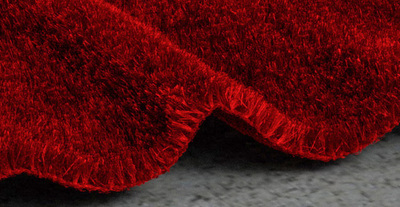
Volumetric appearance models
Many techniques for representing the appearance of complex
materials, such as spatially-varying BRDFs, BTFs, and BSSRDFs,
are fundamentally built around a surface. However, there are
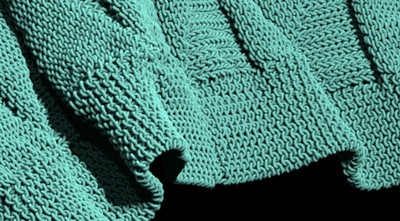
many materials—a sweater, a rag rug, a weathered dock,
the bark of a tree, even just a patch of dirt—that are
not surfaces, and models based on surfaces look wrong when the
view gets close. We’ve worked out ways to compute scattering
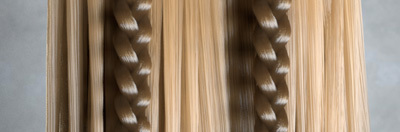
in hair
or in detailed
geometry volumetrically, and generalized
volume rendering to make it work for shiny, oriented materials
like cloth.
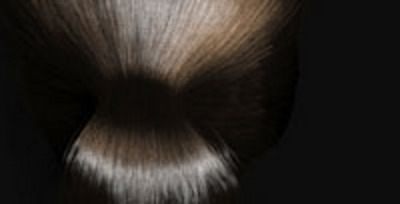
Hair
Since we proposed a now widely
used model for light
reflection from hair fibers, I have been interested in
making hair renderings that more and more closely approach the
actual appearance of hair. We’ve
developed several
ways to compute
multiple scattering, which is important for appearance, as well
as capture methods to measure hairstyles and
also to get better fine-scale
geometry than what’s produced by standard hair
modeling tools.
Cloth
Several of our recent projects have addressed cloth:
rendering
using surface
or volume
models; simulating it using
yarn-based models for better
detail, especially
for complicated garments; measuring
it to see how it deforms.
Light transport for surfaces and volumes
One of the core questions of rendering is how to model and
simulate light transport. Diffusion is a very useful model for the flow
of light through highly scattering media, such
as translucent
materials. Recently we extended this idea
to anisotropic
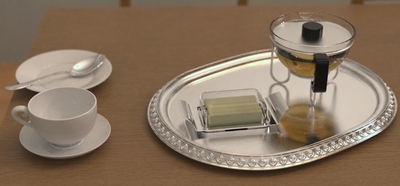
materials. Specular paths cause problems for
rendering algorithms, and we have
a promising new way
to handle them.
Computational photography and 3D scanning
Using cameras in unexpected ways has been part of several
projects, ranging
from image-based BRDF
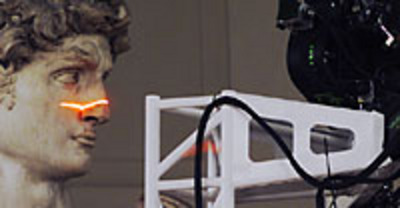
measurement, to processing range images (3D scans) for
the Digital
Michelangelo Project, to the weird inside-out technique
of Dual
Photography.
Reflectance modeling and measurement
Modeling reflection from surfaces is the classic problem in
material appearance. My thesis pioneered the method of
image-based BRDF
measurement; later we measured and proposed a model for
wood surfaces, and measured and proposed a model for
transmission through rough dielectric
interfaces. Going beyond BRDFs, we’ve also measured
BSSRDFs, fiber scattering
functions, and statistical surface textures.