
IvyPlus Visiting Scholar, Stanford University
Research Intern, Google Research
I am a final-year Ph.D. candidate in Computer Science at Cornell University, extremely fortunate to be advised by Prof. Jon Kleinberg. I am currently visiting Stanford Computer Science as an IvyPlus Scholar for the 2025–26 academic year. I am also affiliated with Google Research as a Student Researcher.
I obtained my M.S. in Computer Science from Stanford University, where I worked with Prof. Jure Leskovec. I received my B.S. in Computer Science and Mathematics, graduating Summa Cum Laude (top 1%), from the Hong Kong University of Science and Technology.
My recent research focuses on agentic reasoning and coding, information retrieval, and post-training & RL. I am the DRI and main creator of Gemini-SQL2, which currently ranks #1 on the highly competitive, industry-standard BIRD benchmark. I have worked full-stack across the agentic harness, post-training, data collection, and evaluation.
More broadly, I study how to reason, retrieve, and generate over structure-rich text and context by explicitly exploiting the underlying structure. Representative directions include:
- Recommendation systems, where modeling the rich structure of user–item interaction history is central to nearly every task [ICML’26, NeurIPS’23, ICLR’21].
- Database, where data agents navigate the complex inter-table relationships defined by primary–foreign-key constraints [Gemini-SQL2, Gemini-SQL, VLDB’22].
- Knowledge Graphs, where LLMs retrieve and reason over entities and the relations in the augmented knowledge context. [NeurIPS’24, IC2S2’24].
- Coding, where programming languages carry rich syntactic structure (e.g. AST) and code repositories interlink files through intricate cross-references [Gemini-SQL2, two U.S. patents].
My work has drawn broad recognition and global attention: Gemini-SQL2’s launch announcement is the single most-liked post from Google Research on X over the past year. I also serve as a General Chair of the Learning on Graphs (LoG) Conference 2025 and 2026.
Education
-
 Cornell UniversityDepartment of Computer SciencePh.D. Candidate, advised by Jon Kleinberg2021 - presentGPA 4.2/4.3
 -
 Stanford UniversityDepartment of Computer ScienceM.S., advised by Jure Leskovec2019 - 2021GPA 4.1/4.3
 -
 Hong Kong University of Science and TechnologyComputer Science & MathematicsB.S., Summa Cum Laude (Top 1%)2015 - 2019GPA 4.0/4.3
Experience
-
 Google ResearchResearch Intern2025 - 2026
 -
 Meta AIResearch Scientist Intern2024, 2025
 -
 Microsoft ResearchResearch Scientist Intern2023
 -
 MIT CSAILVisiting Student Researcher2018
News
Selected Publications (view all )
Gemini-SQL2: Model, Harness, and System Design
Yanbang Wang, Qitian Wu, Sami Abu-el-Haija, Mohammadreza Pourreza, Michael Galkin, Hadi Hemmati, Hailong Li, Yeounoh Chung, Fatma Ozcan, Bryan Perozzi, Vahab Mirrokni
Preprint (under review) 2026
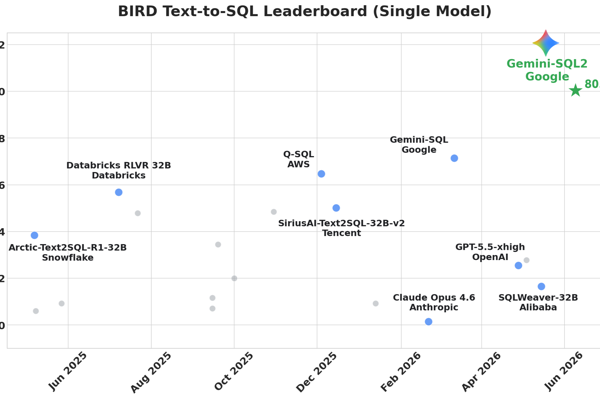
Gemini-SQL2 is currently the best coding LLM for text-to-SQL in the world. Gemini-SQL2 is Gemini 3.1 Pro post-trained and serves in a dedicated agentic harness. It currently ranks #1 on the BIRD leaderboard which is the de facto standard for text-to-SQL tasks.
Gemini-SQL2: Model, Harness, and System Design
Yanbang Wang, Qitian Wu, Sami Abu-el-Haija, Mohammadreza Pourreza, Michael Galkin, Hadi Hemmati, Hailong Li, Yeounoh Chung, Fatma Ozcan, Bryan Perozzi, Vahab Mirrokni
Preprint (under review) 2026
Gemini-SQL2 is currently the best coding LLM for text-to-SQL in the world. Gemini-SQL2 is Gemini 3.1 Pro post-trained and serves in a dedicated agentic harness. It currently ranks #1 on the BIRD leaderboard which is the de facto standard for text-to-SQL tasks.
Microstructures and Accuracy of Graph Recall by Large Language Models
Yanbang Wang, Hejie Cui, Jon Kleinberg
Neural Information Processing Systems (NeurIPS) 2025
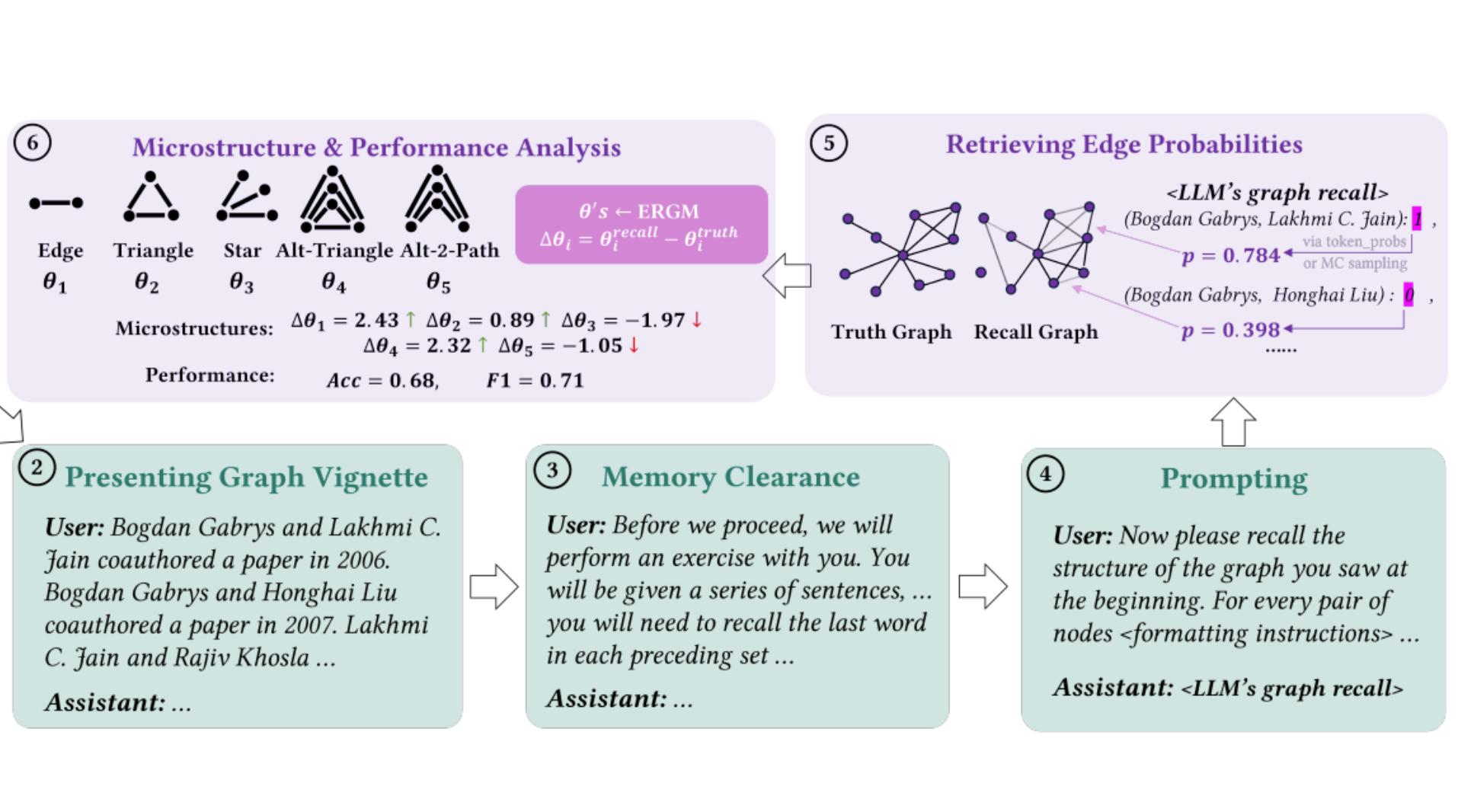
The first systematic study of how LLMs memorizes structural information in text. We find LLMs often underperform and are biased towards certain error patterns, and that stronger models memorizes better when the structures are narrated in a domain-consistent style.
Microstructures and Accuracy of Graph Recall by Large Language Models
Yanbang Wang, Hejie Cui, Jon Kleinberg
Neural Information Processing Systems (NeurIPS) 2025
The first systematic study of how LLMs memorizes structural information in text. We find LLMs often underperform and are biased towards certain error patterns, and that stronger models memorizes better when the structures are narrated in a domain-consistent style.
Negative Sampling From the Ground Up: A Redesign for Recommendation
Yanbang Wang, Jon Kleinberg, Yanhong Wu
International Conference on Machine Learning (ICML) 2026
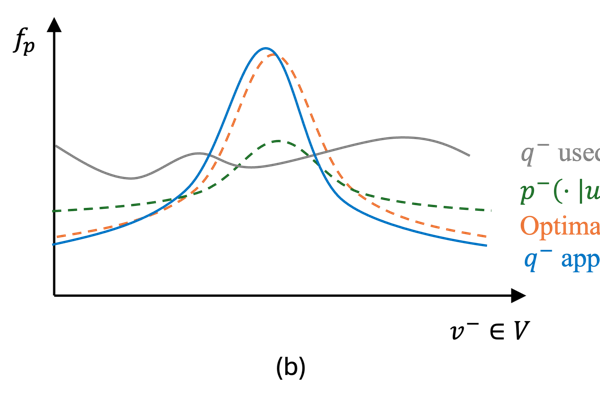
We revisit negative sampling for recommender systems from first principles and propose a redesign that improves recommendation quality.
Negative Sampling From the Ground Up: A Redesign for Recommendation
Yanbang Wang, Jon Kleinberg, Yanhong Wu
International Conference on Machine Learning (ICML) 2026
We revisit negative sampling for recommender systems from first principles and propose a redesign that improves recommendation quality.
Inductive Representation Learning in Temporal Networks via Causal Anonymous Walks
Yanbang Wang, Yen-Yu Chang, Yunyu Liu, Jure Leskovec, Pan Li
International Conference on Learning Representations (ICLR) 2021
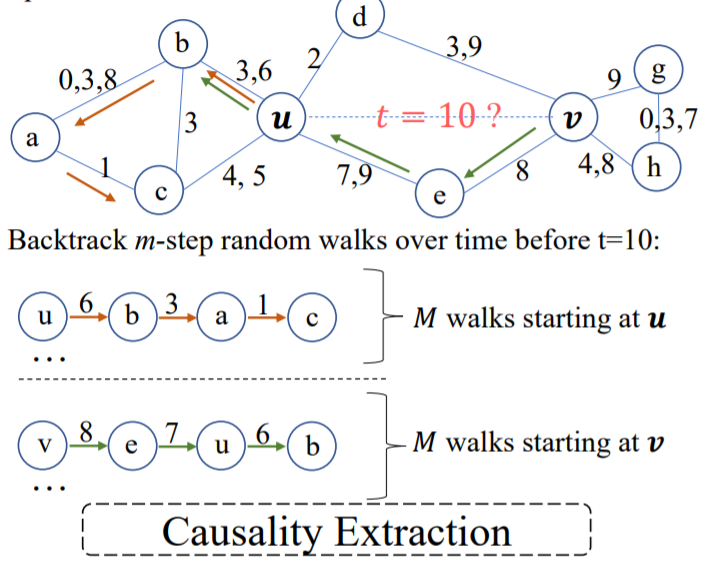
Causal Anonymous Walks (CAWs) automatically retrieve temporal network motifs to represent network dynamics and use an anonymization strategy that keeps the method inductive, achieving SOTA on transductive and inductive temporal link prediction.
Inductive Representation Learning in Temporal Networks via Causal Anonymous Walks
Yanbang Wang, Yen-Yu Chang, Yunyu Liu, Jure Leskovec, Pan Li
International Conference on Learning Representations (ICLR) 2021
Causal Anonymous Walks (CAWs) automatically retrieve temporal network motifs to represent network dynamics and use an anonymization strategy that keeps the method inductive, achieving SOTA on transductive and inductive temporal link prediction.
On the Relationship Between Relevance and Conflict in Online Social Link Recommendations
Yanbang Wang, Jon Kleinberg
Neural Information Processing Systems (NeurIPS) 2023
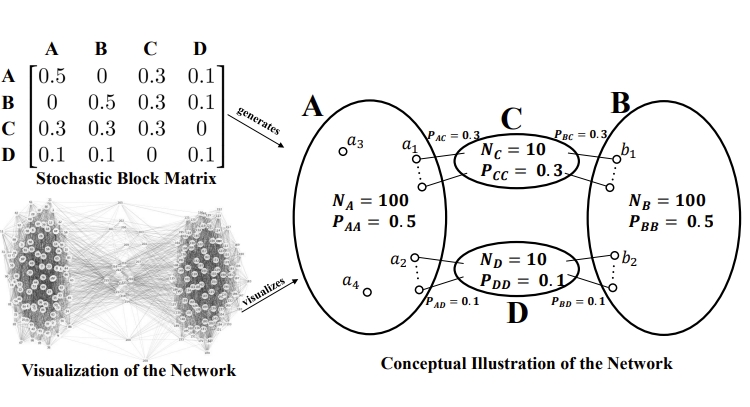
One of the first rigorous analyses of how link recommendations that boost engagement can also escalate conflict and polarization, using the Friedkin–Johnsen model of opinion dynamics.
On the Relationship Between Relevance and Conflict in Online Social Link Recommendations
Yanbang Wang, Jon Kleinberg
Neural Information Processing Systems (NeurIPS) 2023
One of the first rigorous analyses of how link recommendations that boost engagement can also escalate conflict and polarization, using the Friedkin–Johnsen model of opinion dynamics.
From Graphs to Hypergraphs: Hypergraph Projection and its Reconstruction
Yanbang Wang, Jon Kleinberg
International Conference on Learning Representations (ICLR) 2024
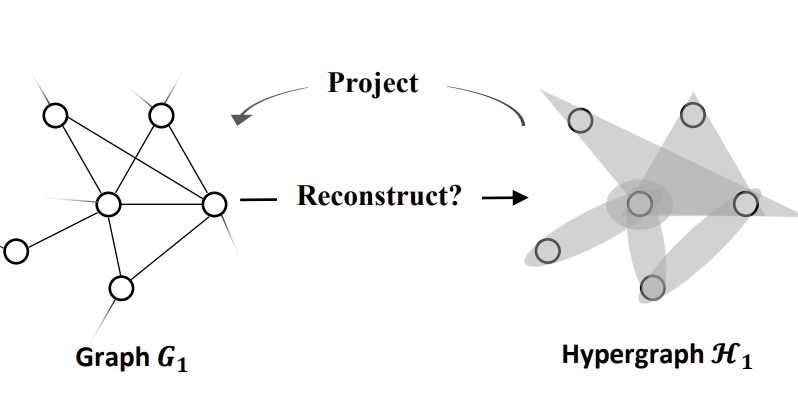
We study the consequences of representing higher-order systems as graphs rather than hypergraphs, characterizing the information lost in hypergraph projection and proposing a learning-based method to reconstruct the original higher-order relations.
From Graphs to Hypergraphs: Hypergraph Projection and its Reconstruction
Yanbang Wang, Jon Kleinberg
International Conference on Learning Representations (ICLR) 2024
We study the consequences of representing higher-order systems as graphs rather than hypergraphs, characterizing the information lost in hypergraph projection and proposing a learning-based method to reconstruct the original higher-order relations.
TEDIC: Neural Modeling of Behavioral Patterns in Dynamic Social Interaction Networks
Yanbang Wang, Pan Li, Chongyang Bai, Jure Leskovec
The Web Conference (WebConf) 2021
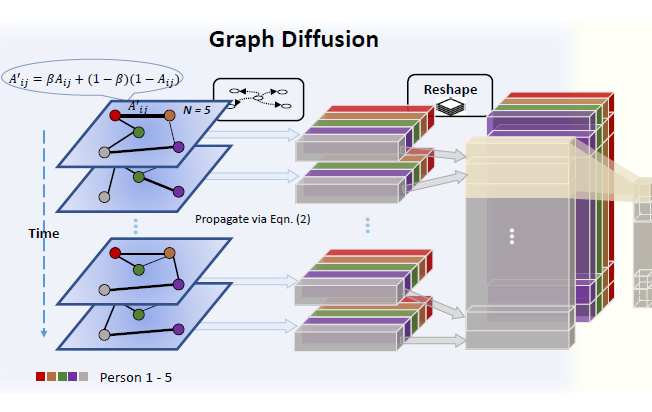
TEDIC learns representations on dynamic social interaction networks by diffusing node attributes over a network and its complement and applying temporal convolutions, outperforming prior methods across four social-character prediction tasks.
TEDIC: Neural Modeling of Behavioral Patterns in Dynamic Social Interaction Networks
Yanbang Wang, Pan Li, Chongyang Bai, Jure Leskovec
The Web Conference (WebConf) 2021
TEDIC learns representations on dynamic social interaction networks by diffusing node attributes over a network and its complement and applying temporal convolutions, outperforming prior methods across four social-character prediction tasks.
Distance Encoding: Design Provably More Powerful Neural Networks for Graph Representation Learning
Pan Li, Yanbang Wang, Hongwei Wang, Jure Leskovec
Neural Information Processing Systems (NeurIPS) 2020
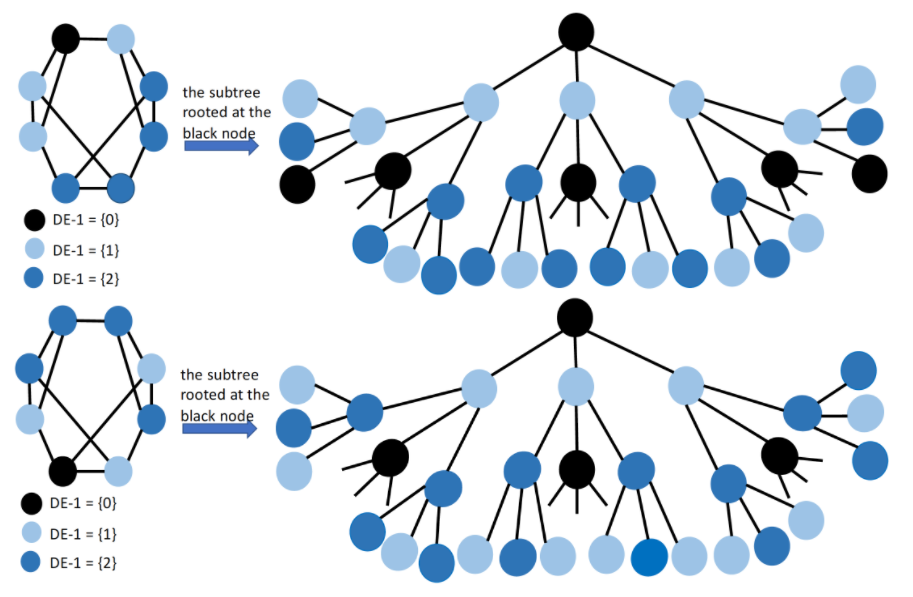
Distance Encoding (DE) is a general class of structure-related features that provably gives GNNs more expressive power than the 1-Weisfeiler–Lehman test, distinguishing node sets in almost all regular graphs where traditional GNNs fail.
Distance Encoding: Design Provably More Powerful Neural Networks for Graph Representation Learning
Pan Li, Yanbang Wang, Hongwei Wang, Jure Leskovec
Neural Information Processing Systems (NeurIPS) 2020
Distance Encoding (DE) is a general class of structure-related features that provably gives GNNs more expressive power than the 1-Weisfeiler–Lehman test, distinguishing node sets in almost all regular graphs where traditional GNNs fail.