CS 4414/5416:
Systems Programming
Synchronization Issues
2026-11-03
Logistics
Upcoming
- P4 (netsim) revision
- Shortened assignment, final part optional
- Autograder posted (open to Thu; recommend Wed)
- P5 (Tetris) will be released by 11/4
- Lab 11 is Friday: multithreaded web service
- Next week: Start asynchronous programming
This Thursday
We have
- A CS colloquium speaker who is an old friend
- A distinguished lecture in Baker Lab 200 at 5
So expect us to end around 4
Recap
Where We Are
This module: Concurrent programming with threads
- Message-based concurrent programming
- Shared memory concurrent programming
- Synchronization issues
- Concurrent network programming
This Week
- Today: Synchronization issues
- See: “Three Easy Parts” chapter
- See also 4410 notes for much more detail
- Thu: Concurrent network programming
Why Synchronize?
Desiderata:
- Preserve global invariants (local violations OK)
- Manage ordering handshakes of various sorts
Basic Mechanisms
For shared memory (vs message-passing style):
Arc,Mutex,RwLock, andCondvar- Atomics (enabling lock-free shared data structures)
Basis for higher-level abstractions (work queues, parallel iteration, etc).
Poll Everywhere!
Which of these is statements about atomics is false?
- Under
SeqCstorder, ops act as if interleaved across threads. - The happens-before relation within a thread is consistent with execution order constraints.
- In
Relaxedorder, the only inter-thread happens-before relations are matched loads and stores. - All threads see the same total modification order when looking at a single variable.
Respond at: https://PollEv.com/davidbindel252 or send davidbindel252 to 22333
Non-Deadlock Bugs
Where do Bugs Happen?
Most synchronization errors are not deadlock!
- Source: Lu et al, “Learning from Mistakes — A Comprehensive Study on Real World Concurrency Bug Characteristics,” ASPLOS 08 (found via OSTEP book)
- So what are the big issues?
Atomicity Violations
“Serializability among multiple memory accesses is violated (i.e. a code region is intended to be atomic, but the atomicity is not enforced during execution).”
- Atomicity here means “indivisible” (not “uses Rust atomics”)
- Ex: Check validity, then use; another thread modifies between
NB: Harder to get this with actor model.
Rust to the Rescue!
Many issues ruled out in safe Rust!
- Borrow checker: no concurrent write + other access
- Have to work harder to screw things up:
- Get lock for a sanity check, release, re-lock, and assume check?
- Still possible, but Rust makes it harder
- Are atomics worse for thinking about atomicity?
Ordering Violations
“Desired order between two (groups of) memory accesses is flipped”
- Example: Read from a thread before write from another
- Easy to mess up with atomics (particularly in
Relaxed) - More likely to get right with locks + condition variables
Rust doesn’t really help you with this.
Ask Me a Question!
A Philosophical Problem
Dining Philosophers
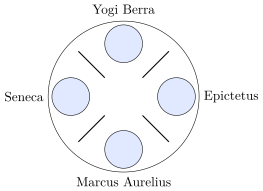
Dining Philosophers V1
Dining Philosophers Problem!
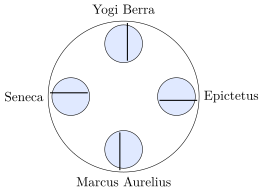
Dining Philosophers Fix 1
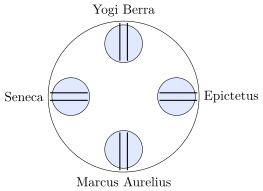
What if the philosophers have enough utensils?
Dining Philosophers Fix 2
What if they put back a chopstick if they can’t get both?
(Can implement with try_lock on Mutex)
Dining Philosophers Fix 3
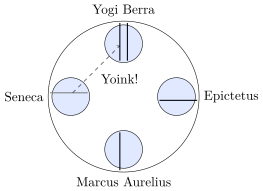
What if they can steal chopsticks?
Dining Philosophers Fix 4
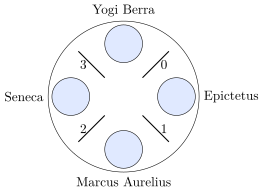
What if they acquire chopsticks via a global order?
Deadlock Conditions
Philosophers Revisited
Resource Allocation Graph
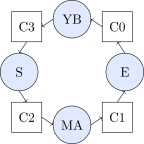
Resource Allocation Graph
Bipartite graph with:
- Thread-to-resource “waiting for” edges
- Resource-to-thread “held by” edges
Cycles mean trouble!
Necessary and Sufficient Conditions
- Mutual exclusion
- Multiple threads cannot simultaneously hold the same resource
- Hold and wait
- Threads can hold a resource and wait for another
- No pre-emption
- A thread cannot be forced to relinquish a resource until it completes its task
- Circular wait
- There is a cycle in the resource allocation graph
(Coffmann, 1971)
Prevention Strategy
Four necessary and sufficient conditions:
- Mutual exclusion
- Hold and wait
- No pre-emption
- Circular wait
Prevention: Make one of the four conditions impossible!
Break (or Reduce) Mutual Exclusion
- Replicate resources! More chopsticks…
- Lock-free data structures
- Reduce granularity of protection
RwLockvsMutex
Breaking Hold-and-Wait
try_lockfor nonblocking attempt to lock- Use condition variables to cede lock
- Acquire and release simultaneously
Allowing Preemption
Optimistic concurrency doesn’t deadlock:
- Set a checkpoint
- Compute assuming no contention
- Validate assumption
- Commit if no contention, rollback/abort otherwise
Breaking Circular Wait
- Order resources (or locks around them)
- Must acquire resources in ascending order
- Then no cycles possible in resource allocation graph!
Ask Me a Question!
Detection and Recovery
What if We Deadlock?
- Kill the program?
- Or maybe kill a thread?
- Maybe code will be robust to this?
- Or roll back a thread?
- Requires some checkpointing
Simplest Protocol
- Add timeout to resource acquisition
- If timeout exceeded, kill a thread
Removes hold-and-wait.
Checking Resource Graphs
- Periodically compute resource graph
- Check for cycles (DFS or BFS)
- If cycle appears, kill a thread involved
Maybe more efficient than timeout?
Avoidance
Safe State
- Consider state of allocations (resources to threads)
- State is safe if deadlock is not guaranteed
- Scheduler blocks on resource acquisition that would create unsafe state
Banker’s Algorithm (Dijkstra)
Check for safety involves simulating future:
- while processes exist (in simulation)
- Choose \(p\) that can complete with available resources
- If none, state is unsafe
- Add resources held by \(p\) to available pool
- Remove process \(p\) from list
- Choose \(p\) that can complete with available resources
If loop completes, state is safe
Ask Me a Question!
Livelock and Starvation
Livelock in Life
- The “no, after you” problem
- Action is happening, this is not deadlock!
- Deadlock prevention/avoidance can still cause livelock
Ordering
Fundamentally, need to break ties!
- Priority ordering: simple, but may cause starvation
- Often use randomized protocols
Wrap-Up
Poll Everywhere!
Which is true?
- We can always undo deadlock by killing a random thread.
- The four conditions for deadlock are sufficient, not necessary.
- The Banker’s algorithm of Dijkstra is about deadlock avoidance.
- Deadlock-based errors are the most common synchronization bugs.
Respond at: https://PollEv.com/davidbindel252 or send davidbindel252 to 22333
Summary
Various types of synchronization issues:
- Non-deadlock failures of atomicity, ordering
- Deadlock
- Livelock
Summary
- Four conditions for deadlock
- Mutual exclusion
- Hold and wait
- No pre-emption
- Circular wait
- Can prevent, detect, or avoid deadlock
Prevention, detection, or avoidance
- Prevention: Static conditions disallow deadlock
- Avoidance: Dynamic checks disallow deadlock
- Detection: Break deadlock state if it happens
Up Next
- Thu: Multi-threaded network programming
- Fri: Practicing multi-threaded network programming
- Next week: Start asynchronous programming