

Eric Qiu ’27, a young researcher in human-centered AI, has had a busy 2026. So far this year, the computer science and math major has been the lead author on three papers, with another forthcoming in October. His research explores how AI systems can collaborate with people over time, including how agents can support decision-making and learning rather than operating in isolation. He’s especially interested in large language models, AI agents, and education. Qiu conducts research with his advisor Kilian Weinberger, professor of computer science in the Cornell Ann S. Bowers College of Computing and Information Science.
You are the first author on a recent paper, “From Heuristics to Analytics: Forecasting Effort and Progress in Online Learning,” which was presented at the International Conference on Educational Data Mining (EDM) this summer. What did your team discover, and how can your system help improve tutoring outcomes?
Our system forecasts how much a student will practice and how much progress they will make over the following week in an intelligent tutoring system – think Khan Academy. We found that our machine-learning-based prediction framework was substantially more accurate than existing baselines. These forecasts could help tutors set more realistic and personalized goals, notice changes in student engagement earlier, and offer support when it is most useful.
Sometimes it can be difficult for undergraduate students to find a research project, let alone be the first author on several published papers. How did you get involved?
I became involved in research through the National Science Foundation’s Research Experiences for Undergraduates program at Carnegie Mellon’s Human-Computer Interaction Institute. During the summer of 2025, I worked with Professor Vincent Aleven and our team on using data to support goal-setting in online tutoring systems. We continued developing the project after the summer, and it eventually became a published paper. At Cornell, I am now advised by Professor Kilian Weinberger and conduct research with his machine-learning group.
What other research projects have you been involved with?
Lately, I have worked on AI-agent systems for coding and tutoring, studying how multiple agents can evaluate ideas, challenge one another, and make decisions together. Earlier, I worked on computer-vision methods for identifying brain tumors in medical images. That project placed second in an international challenge and was presented at MICCAI 2024.
Growing through research and teaching
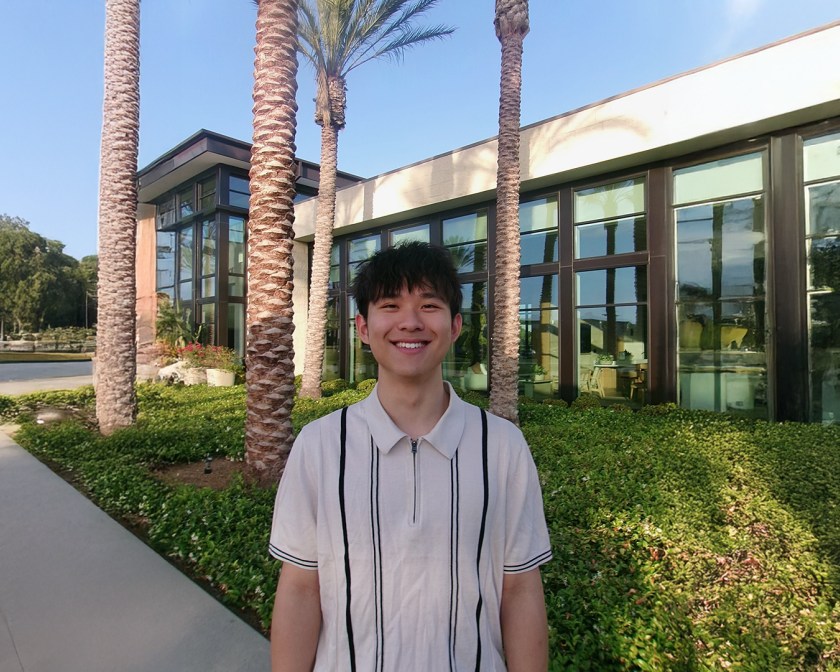
“Cornell Bowers has given me opportunities to conduct research and teach machine learning while working with faculty, graduate students, and undergraduates who are generous with their time and ideas. Cornell is challenging, but that challenge has made me more comfortable with uncertainty and more willing to take on ambitious projects.”
Eric Qiu ’27
computer science and math major
computer science and math major