

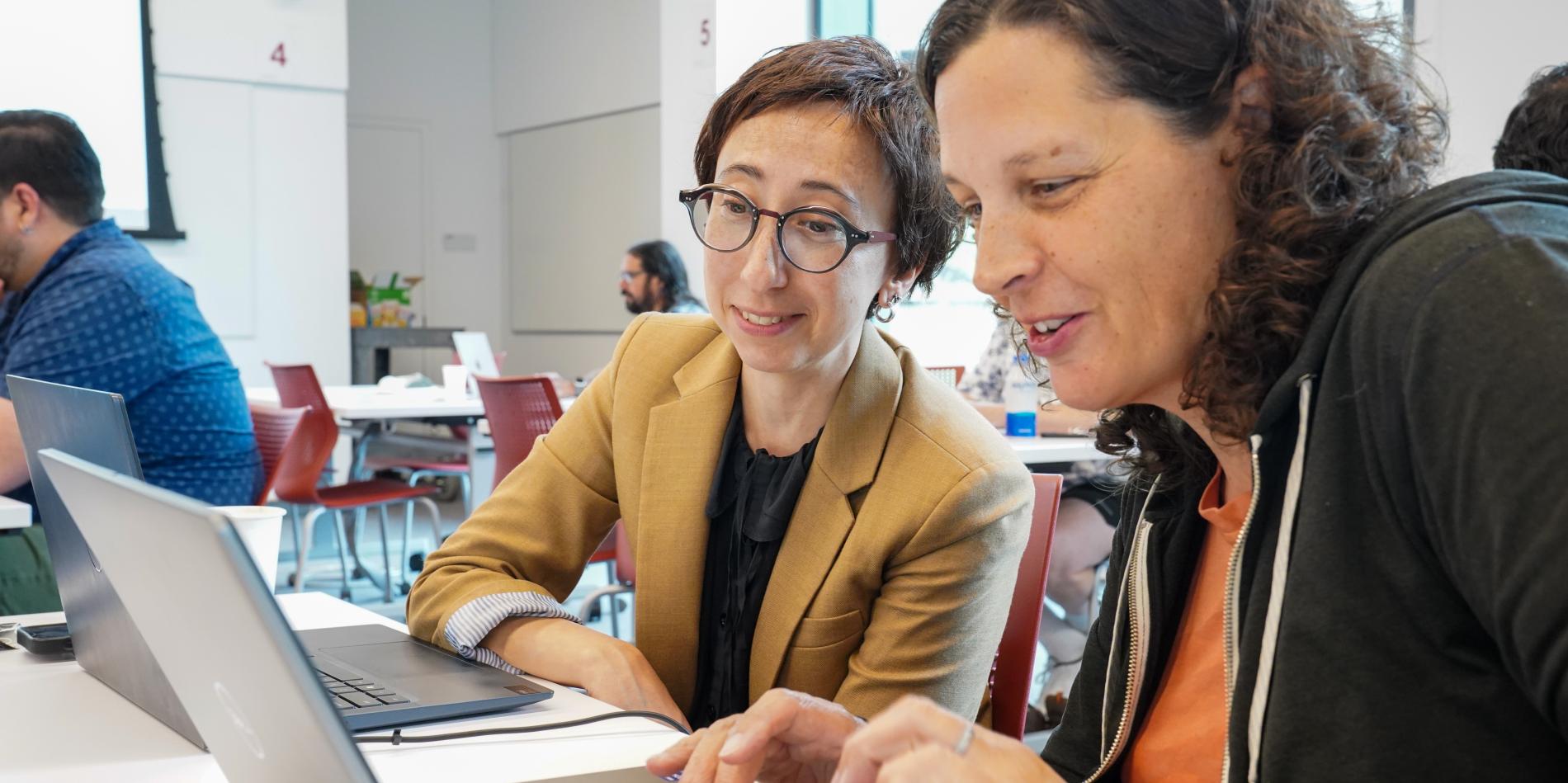
While most students were away from campus this summer, staff in the Cornell Ann S. Bowers College of Computing and Information Science took over the classroom to learn to use new artificial intelligence tools in the workplace.
Faculty in Cornell Bowers have long been at the frontier of innovating and evaluating AI, so why shouldn't staff also be on the cutting edge of applying it? That was the thinking behind “We Do AI” – the first educational series at Cornell to provide staff across an entire college with advanced training in how to use AI effectively, as well as the time and support to experiment with AI for their daily workflows. During four class sessions and a final capstone experience, staff developed their prompting skills, learned to analyze and visualize data, and created software programs with no coding experience required.
The staff could not have asked for a better instructor. Sorin Lerner, the new dean of Cornell Bowers and an expert in AI and machine learning, spearheaded the series and taught most of the sessions. First and foremost, he wanted staff to have fun, build community, and learn new AI skills, which are becoming increasingly valuable in many professions.
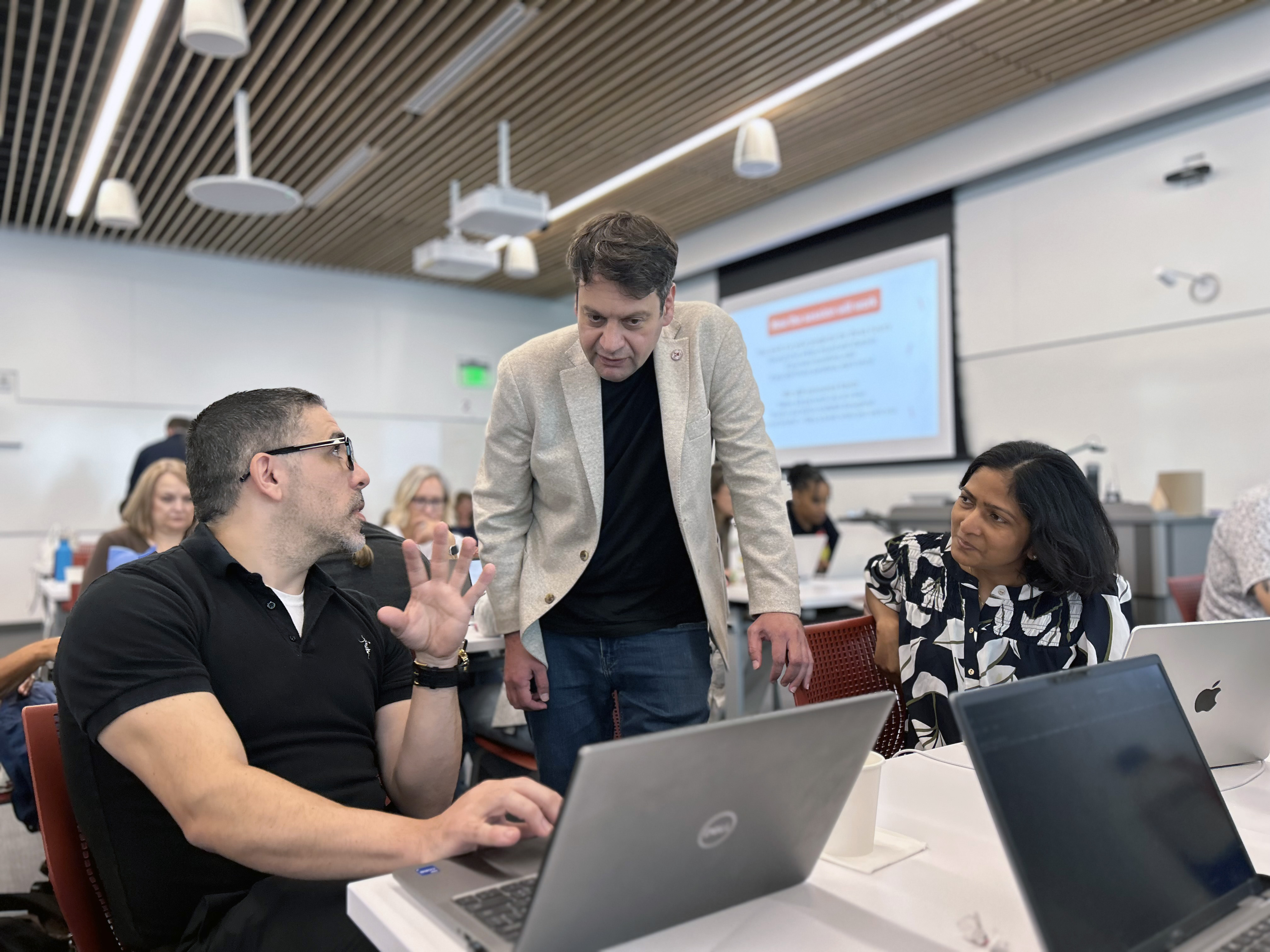
"AI is becoming an important skill everyone needs to have. Our undergrad students are going to be educated in this space, and so I think it's only fair to also educate our staff in AI as well," Lerner said. "I hope the staff gained confidence in exploring and pushing the boundaries, and also became excited about being more creative with the use of AI in various settings."
Throughout the summer, about 80 participating staff received access to Claude, a collection of large language models produced by Anthropic that includes a chatbot, an AI assistant called Claude Cowork and Claude Code, an agentic coding tool. In partnership with Amazon Web Services and CIT, participants were able to use the tools within a safe and isolated virtual environment.
After an introduction to how AI technology works and the basics of AI prompting, staff tried their hand at a mix of class demos and personal projects.
In one session, Steven Jackson, vice-provost for academic innovation at Cornell and professor of information science and science and technology studies, gave an overview of the university's approach to AI and education, and his office's efforts to increase AI literacy and establish human-centered, sustainable AI practices.
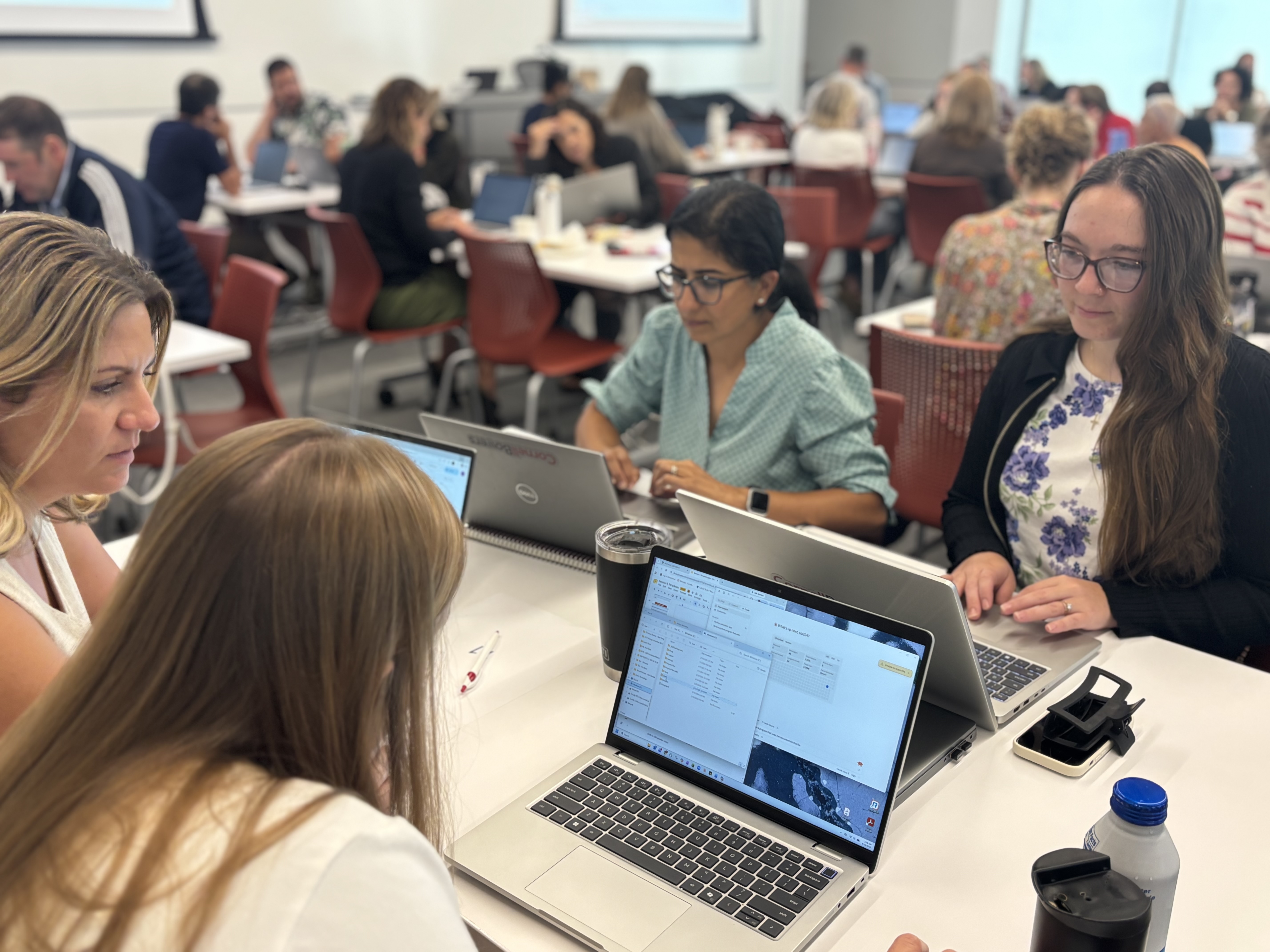
The series culminated in a five-hour capstone project where staff worked intensively in small teams. Successful projects included an app for drafting memoranda of understanding, a dashboard to analyze 10 years of course enrollment data for a professional master’s program, and a dashboard designed to flag potential errors with student time cards. Staff have also used Claude Cowork to make teaching assistant assignments faster and more accurately.
Lerner even helped one team create a program to count the number of people waiting in line at a coffee shop from an image of the line.
During the series, Lerner emphasized that AI can be a tool to enhance – not replace – workers, and it is vital to collaborate with AI agents, instead of letting them do all the work.
"The more I use AI, the more I'm convinced critical thinking skills are paramount for using AI effectively at work," said Ingrid Jensen, director of student services for the college and a member of the “We Do AI” organizing committee. "AI can help free up time to be more strategic and focus on priorities."
Jake Bodtke, a building/facilities coordinator for Cornell Bowers, discovered a surprising use for Claude. He routinely works with vendors who rent spaces within the college's buildings and who require specific furniture configurations. Bodtke uploaded two floor plans – one with furniture and one without. "Claude was able to read the instructions, analyze the drawings, correctly scale and place the furniture, and then generate a revised floor plan," he said.
Now, Bodtke can easily provide customized floor plans to potential vendors. Next, he wants to try rendering actual images of different furniture arrangements so vendors can better visualize the spaces.
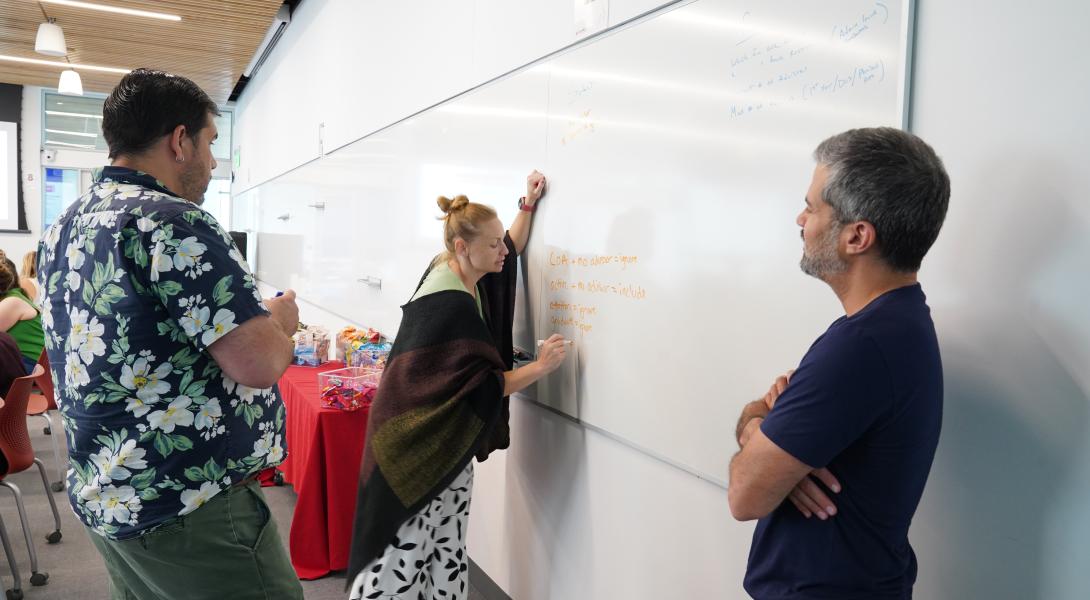
Student Services staff brainstorm solutions during the final capstone event.
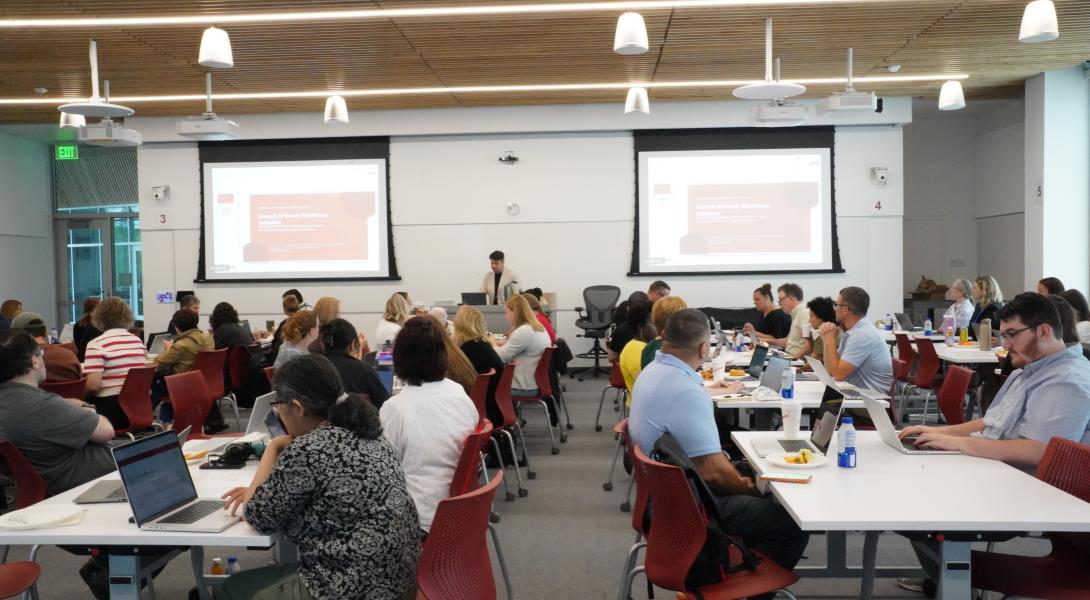
Dean Sorin Lerner leads the discussion during one of the "We Do AI" educational sessions.
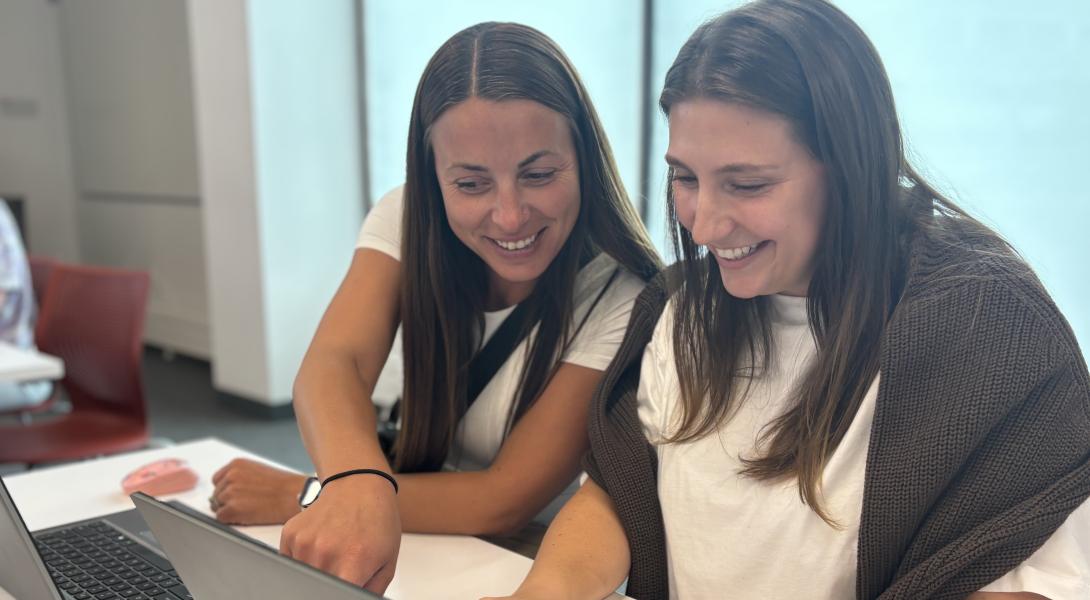
Megan Adams and Kellie Wainwright, both staff members in the department of Statistics and Data Science, collaborate on a project together.