
Andrew Kang ’26 discovered a passion for research during his time as a computer science and mathematics major in the Cornell Ann S. Bowers College of Computing and Information Science.
After he graduates this month, Kang will pursue a Ph.D. at the University of Michigan, where he will investigate formal methods in control systems—a multidisciplinary field that leverages the methods of computer science and mathematics to prove that cyber-physical systems, from robotics to autonomous vehicles, satisfy critical safety and security guarantees.
“I didn’t want to be limited to a single technical domain,” said Kang, who grew up just west of Toronto. “I believe that there is immense value in integrating perspectives across disciplines, especially nowadays in the era of AI.”Cornell provided a home to explore, and Cornell Bowers instilled in him an appreciation of computer science’s synthesis of mathematics, logic, philosophy, and engineering, he said.
“I really value Cornell Bowers’ unique curriculum,” he said. “The courses place an emphasis on those first principles that far outlast any particular programming tool. That rigor was foundational to my ability to translate high-level specifications into concrete engineering results.”
As a first-year student, Kang explored research in data engineering in the lab of Sainyam Galhotra, assistant professor of computer science in Cornell Bowers. That summer, he participated in the Bowers Undergraduate Research Experience (BURE), a 10-week, paid summer research program that offers undergraduates a taste of research life. His BURE experience was transformative—it’s his favorite Cornell memory, and it motivated his decision to pursue doctoral research.
In his ensuing years at Cornell, Kang broadened his research scope, engaging in “full stack research” – getting involved with each stage of the research process, just like a full stack developer who works on both the front and backend of an application. He launched a student organization called Computational & Quantitative Social Science at Cornell (CQSS) that explored social science problems through computational methods. This year, he received an Honorable Mention for the Outstanding Undergraduate Research Award from the Computing Research Association (CRA).
Foundational knowledge fuels innovation.
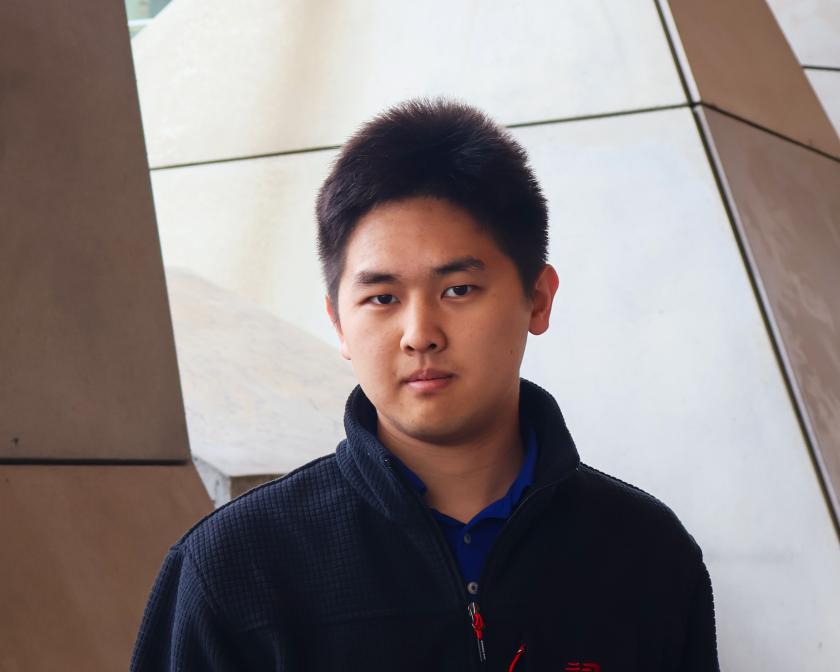
I really value Cornell Bowers’ unique curriculum. The courses place an emphasis on those first principles that far outlast any particular programming tool. That rigor was foundational to my ability to translate high-level specifications into concrete engineering results.
Andrew Kang ‘26
Computer Science and Mathematics
Computer Science and Mathematics