Computing for the AI era.

Cornell’s master’s in Computer Science prepares you to thrive in a future shaped by artificial intelligence. Elevate your technical and leadership skills through deep training in computer science and practical experience with AI. 

The program is intensive, hands-on, and career-focused. You’ll tackle real problems, work on substantial projects, and develop the technical judgment to use AI well. You’ll also build the foundation to keep learning as new technologies and opportunities emerge. You can pursue technical specialization paths, cross-disciplinary applications, and business and entrepreneurship training.

Whether you’re launching your career, accelerating it, or returning to school to build new expertise, the program prepares you for what comes next. You’ll leave with greater technical depth, practical experience, and the ability to take on new challenges as AI reshapes computing, work, and the world around us.


Accepting applications for spring 2027 start

Explore the curriculum.

The master's in Computer Science is designed to allow students flexibility in their course choices so they can best tailor their program of study to match both what they are interested in and their post-graduation employment goals. 


Academic Planning

 A student must complete a total of 30 credit hours.

  • Three to six (3-6) of the 30 credits must be earned as project credit.
  • None of the 30 credits may be counted toward any other degree program.
  • All non-project credits must be earned from courses that are both "technical" and "advanced".

View credit distribution details on Academic Planning.

The Master's Project is defined as the development of a computer science application (software or hardware) useful in exploring and/or solving an engineering problem.

Project categories include:

  • Joining a faculty member's research group.
  • Further developing a project started within an advanced course, perhaps in collaboration with other students from that course. (NOTE: project must be done after the course is completed and have substantial new content to be considered a valid "stand-alone" project.
  • Working more one-on-one with a faculty member - this might either be a smaller project or a test-run for a larger initiative.
  • Working as a member of one of the College's large team efforts — which  are becoming  increasingly common
  • Collaborating with another Bowers or Engineering department's MEng, Ph.D. or faculty.
  • Providing critical computer science skills to disparate projects across the University.
  • Working on commercial, industrial or government projects — with appropriate coordination of NDAs.
  • Working with other students (typically either CS or Business School ) on exercises which may develop into 'start-ups'.

View project details on Academic Planning.

Academic Standards: The program maintains the following grading requirements to ensure graduate-level excellence.

  • A minimum of twenty-eight credits required must be taken for a letter grade.
  • No course with a grade of less than C- will be counted for MEng credit.
  • A grade of B or better is required for all the credits associated with the project.
  • A cumulative GPA of at least 2.5 must be maintained to continue in the program.

Visit Academic Planning for more information. 

AI Innovation + Entrepreneurship

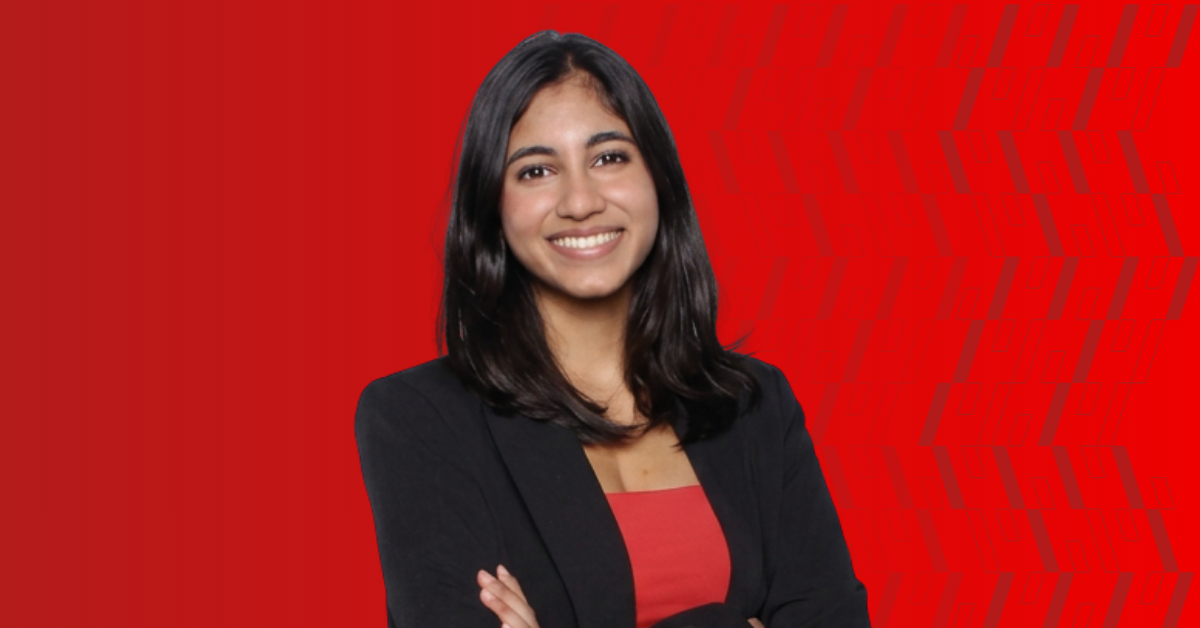
Arushi’s journey at Bowers showcases her passion for AI innovation. From courses in AI and machine learning to leading entrepreneurial projects and startups, she is turning cutting-edge ideas into career-ready impact. Next stop: Senior Data Scientist at Capital One.
 

Cornell – shaping what's next in AI since 1956
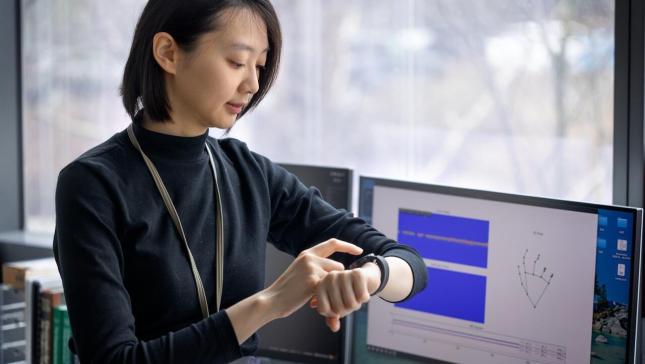
woman with AI watch

#3 in AI

Ranked #3 in AI among U.S. institutions, Cornell Bowers continues to innovate in the field of AI, with faculty conducting award-winning research in areas such as human-AI interaction, robotics, cybersecurity, computational sustainability, and AI trust and accessibility. 
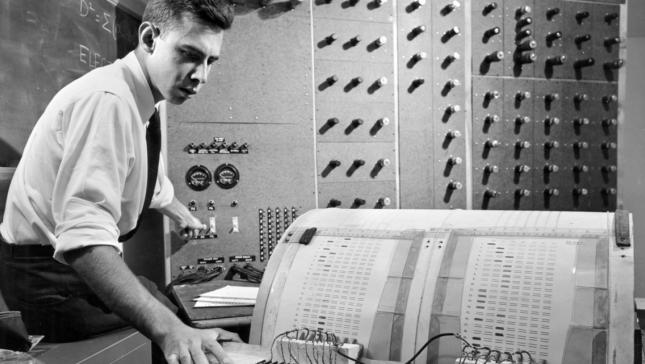
Division of Rare and Manuscript Collections Frank Rosenblatt ’50, Ph.D. ’56, works on the “electronic profile analyzing computer” – a precursor to the perceptron.

A founding force in AI

Cornell University played a foundational role in the development of AI. In 1956, Cornell Ph.D. graduate and "father of deep learning," Frank Rosenblatt ’50, Ph.D. ’56 (pictured above), demonstrated the perceptron – the first machine that could learn to classify what it saw. Every deep learning system in use today descends from that algorithm. Cornell went on to found one of the world's first computer science departments in 1965, and its faculty have twice won the Turing Award, commonly referred to as the Nobel Prize in computing. 

Student Resources and Support

Our mission is to help you succeed so you can fully participate in the Cornell Bowers experience.


Current Student Resources

Program Office