

Date: September 12, 2025
Title: Multi-Agent Systems Execute Arbitrary Malicious Code
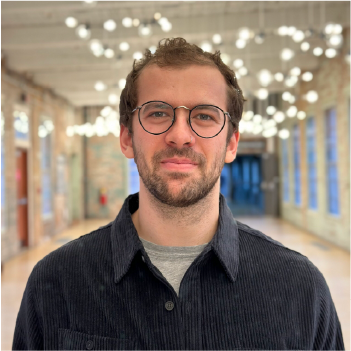
Speaker: Harold Triedman, Ph.D. student in Computer Science at Cornell Tech
Abstract: Multi-agent systems coordinate LLM-based agents to perform tasks on users’ behalf. In real-world applications, multi-agent systems will inevitably interact with untrusted inputs, such as malicious Web content, f iles, email attachments, and more. Using several recently proposed multi-agent frameworks as concrete examples, we demonstrate that adversarial content can hijack control and communication within the system to invoke unsafe agents and functionalities. This results in a complete security breach, up to execution of arbitrary malicious code on the user’s device or exfiltration of sensitive data from the user’s containerized environment. For example, when agents are instantiated with GPT-4o, Web-based attacks successfully cause the multi-agent system execute arbitrary malicious code in 58-90% of trials (depending on the orchestrator). In some model-orchestrator configurations, the attack success rate is 100%. We also demonstrate that these attacks succeed even if individual agents are not susceptible to direct or indirect prompt injection, and even if they refuse to perform harmful actions. We hope that these results will motivate development of trust and security models for multi-agent systems before they are widely deployed.
Bio: I’m a first-year PhD student in Computer Science at Cornell Tech, working with Vitaly Shmatikov’s lab on privacy, security, and AI. Right now, I’m generously funded by a Cornell University Fellowship. From next year on, I’ll be an NSF Graduate Research Fellow.
From 2021 to 2024, I worked as a Senior Privacy Engineer at the Wikimedia Foundation, focusing on differential privacy, algorithmic accountability and transparency, and global accessibility. I’m still working on utilizing Wikimedia’s public data for quick and accurate geolocated online trend analysis.