

Date: October 1, 2025
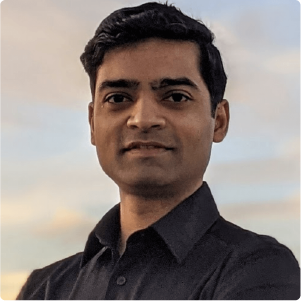
Speaker: Vikash Kumar
Title: Should? And What Should Robots Learn from Humans?
Abstract: In today’s robotics era, progress is driven largely by simulation-to-reality (sim2real) transfer and teleoperation (teleOp). While these paradigms have delivered impressive results, they face fundamental limits in scalability and generalization that are often overlooked. This talk will reflect on whether learning indirectly from humans can provide a more sustainable and viable path forward. We will examine what dimensions of human expertise—ranging from dexterous motor control to adaptive problem-solving—are most valuable for robotic systems, and how such knowledge might be encoded, abstracted, or reimagined for machines. The discussion will challenge prevailing assumptions, surface open questions, and highlight opportunities for rethinking the foundations of robot learning through a more human-centered lens.
Bio: Vikash Kumar is an Adjunct Professor at the Robotics Institute, CMU. He finished his Ph.D. at the University of Washington with Prof. Sergey Levine and Prof. Emo Todorov and his M.S. and B.S. from the Indian Institute of Technology (IIT), Kharagpur. He has been recognized with "Early Career Keynote" at Conference of Robot Learning and "Young Alumni Achiever's Award" from Indian Institute of Technology, Kharagpur. His professional experience includes roles as Sr. Research Scientist at FAIR-MetaAI, and Research Scientist at Google-Brain and OpenAI.
Vikash’s research centers on understanding the fundamentals of embodied intelligence across biological, digital, and electromechanical systems. His research leverages data-driven techniques to realize artificial beings — both digital and physical — that are indistinguishable from humans in their appearance, spatial reasoning, and behavioral intelligence. His work has led to advancements such as human-level dexterity in anthropomorphic robotic hands as well as physiological digital twins, low-cost scalable systems capable of contact-rich behaviors, skilled multi-task multi-skill robotic agents, and more.
He is the lead creator of MyoSuite and RoboHive, and a founding member of the MuJoCo physics engine, now widely used in the fields of Robotics and Machine Learning. His works have been recognized with the best Master's thesis award, best manipulation paper at ICRA’16, best paper award at ICRA'24, best workshop paper ICRA'22, CIFAR AI chair'20 (declined), and have been widely covered in a wide variety of media outlets such as NewYorkTimes, Reuters, ACM, WIRED, MIT Tech reviews, IEEE Spectrum, etc. (Webpage: http://vikashplus.github.io)