

Date: October 8, 2025
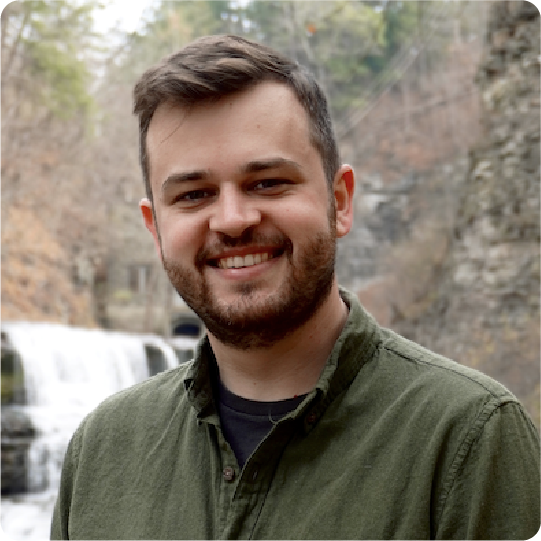
Speaker: Dr. Jake Welde, Assistant Professor, Sibley School of Mechanical and Aerospace Engineering
Title: Geometric Methods for Efficient and Explainable Control of Underactuated Robotic Systems
Abstract: Aerial robots have the potential to move dynamically through unsafe, cluttered, or hard-to-reach environments to perform vital tasks that humans cannot. However, to achieve the morphological complexity necessary for physical interaction with their surroundings, today’s aerial robots sacrifice dynamic behavior — only simple, single-body vehicles like quadrotors fly acrobatically, whereas bulky, complex systems move sluggishly and cautiously. On the contrary, complex biological organisms like hummingbirds demonstrate incredible dexterity and agility simultaneously, far outstripping current robotic systems.
To realize even a fraction of these capabilities, I believe we must jointly explore the combined control-morphology design space of such systems. In particular, I argue that differential geometry offers a remarkably effective toolkit for building abstractions that facilitate this interplay. By leveraging the mechanical structure, natural symmetry, and latent hierarchy present in the dynamics of even complex robotic systems, we enable efficient algorithms for trajectory planning, tractably certify hierarchical controllers, and accelerate learning-based control. The insights obtained also guide design, closing the control-morphology feedback loop and leading to synergies between a robot’s embodiment and its controller. Ultimately, we aim towards a future in which aerial robots interact with their surroundings as dynamically and capably as their counterparts in Nature.
Bio: Dr. Jake Welde is an Assistant Professor in the Sibley School of Mechanical and Aerospace Engineering, working at the intersection of robotics, control theory, applied mathematics, and design. His research explores the role of differential geometry and dynamical systems theory in control synthesis and design for robotic systems, exploiting structural properties to explainably synthesize efficient controllers, accelerate learning algorithms, and develop more capable robot morphologies. His group explores both abstract questions in control theory as well as concrete implications in the design of autonomous aerial robots, with the goal of synergy between these dual aspects of autonomous systems.
Prior to joining MAE at Cornell in 2025, Jake spent a decade at the University of Pennsylvania, where he completed his undergraduate and doctoral degrees in Mechanical Engineering and Applied Mechanics and his Masters in Robotics, working in the GRASP Laboratory. Jake was a finalist for a Best Paper Award at ICRA (2021) and the recipient of a National Science Foundation Graduate Research Fellowship (2019). He has also been recognized as an RSS Pioneer (2024) and has earned departmental awards for teaching, scholarship, and leadership.