

Date: September 24, 2025
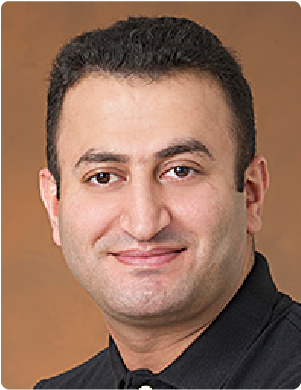
Speaker: Dr. Oktay Arslan
Title: Challenges of Developing Autonomous Vehicles for Real-World Applications
Abstract: Autonomy has become ubiquitous in every aspect of daily life. Today's society is rapidly advancing towards autonomous vehicles that interact with humans; and we are witnessing significant progress in development of autonomous vehicles for many applications (unmanned aerial systems, space robots, self-driving cars, etc). The safety-critical nature of these systems requires us to provide simple, easy-to-test approaches that are not necessarily the best in terms of performance.
Bio: Dr. Oktay Arslan is the Vice President of Robotics at Field AI, where he leads autonomy projects focused on legged and humanoid robots. His academic research spans planning, control, estimation, learning for robotic systems and autonomous vehicles. Before joining Field AI, he worked as an AI/ML Technical Manager (Senior Principal Engineer) at Aptiv, contributing to the development of L2/L2++ autopilot systems for autonomous driving. Before his time at Aptiv, he worked as an AI/Robotics Research Engineer at Acubed, the Silicon Valley innovation center of Airbus. In this role, he contributed to several autonomy projects within the Wayfinder team, including autonomous landing for commercial aircraft, planning and control for self-flying taxis, and the certification of autonomy software. Before his time at Airbus, Dr. Arslan was a Staff Autopilot Software Engineer at Tesla Inc., where he played a key role in developing autopilot software, specifically in behavior planning, path planning, and controls for Tesla's Model 3, S, and X vehicles. He implemented traffic-aware lane change and merging behaviors for the navigate-on-autopilot feature, as well as the path planner for the smart summon feature. Earlier in his career, he worked as a Robotics Technologist at NASA's Jet Propulsion Laboratory (JPL), contributing to various autonomy projects for robotic platforms such as quadrotors, Mars rovers, and spacecraft. During his doctoral studies, Dr. Arslan completed a research internship at Mitsubishi Electric Research Labs and a co-op as a Guidance, Navigation, and Controls Engineer at Aurora Flight Sciences. There, he implemented the high-level route planner for Boeing's Unmanned Little Bird H-6U during the Autonomous Aerial Cargo Utility System (AACUS) project. Dr. Arslan earned his Ph.D. in Robotics, along with dual M.S. degrees in Computer Science and Aerospace Engineering, all from the Georgia Institute of Technology. He also holds an M.S. in Defense Technologies and dual B.Sc. degrees in Computer Engineering and Electrical Engineering from Istanbul Technical University.