Date: November 12, 2026
Time: 11:45 a.m. - 12:45 p.m.
Location: G01 Gates Hall
Title: Using advances in AI to address classic debates in cognitive science
Speaker: Brenden M. Lake, Princeton University
Host: John Thickstun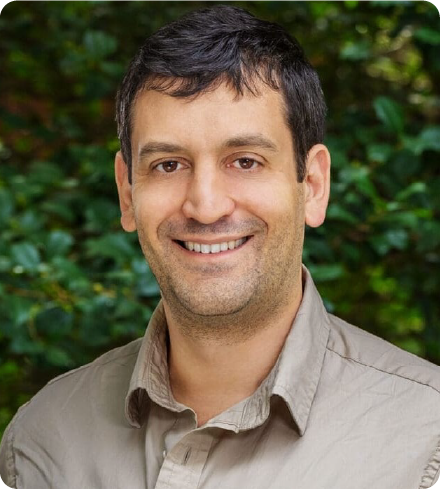
Abstract: AI and cognitive science are two fields that grew up together and share a goal of understanding intelligence in computational terms. Given the rapid progress in AI, now is an exciting time to revisit foundational questions in cognitive science and see if we can make new progress. I will describe our work using modern neural network architectures and training techniques to advance three longstanding debates: (1) What ingredients do children need to learn words? (2) Can neural networks capture human-like systematic generalization? And (3) Is the mind better characterized as Bayesian or connectionist, symbolic or sub-symbolic?
Bio: Brenden M. Lake is an Associate Professor of Computer Science and Psychology at Princeton University. He received his B.S. and M.S. in Symbolic Systems from Stanford University in 2009 and his Ph.D. in Cognitive Science from MIT in 2014. He was a postdoctoral Data Science Fellow at NYU from 2014–2017 and a faculty member there from 2017–2025. Brenden is a recipient of the Robert J. Glushko Prize for Outstanding Doctoral Dissertation in Cognitive Science, an MIT Technology Review Innovator Under 35, and the author of research selected by Scientific American as one of the 10 most important advances of 2016. His research seeks the ingredients of intelligence: his lab uses advances in machine intelligence to better understand human intelligence, and insights from human cognition to develop more fruitful and capable forms of machine intelligence.

