Date: Thursday, October 30, 2025
Time: 11:45 a.m. to 12:45 p.m.
Location: G01 Gates Hall
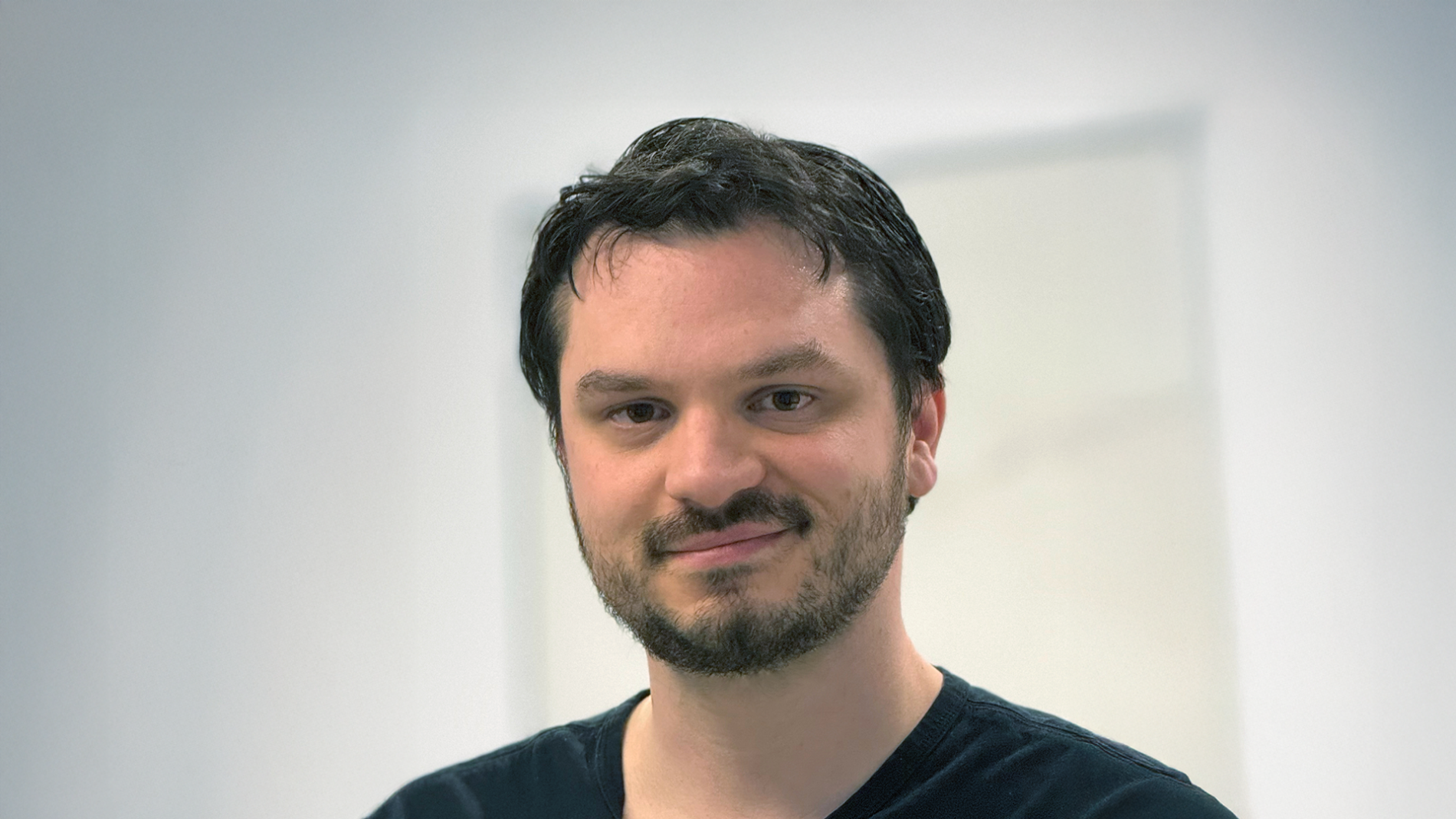
Speaker: Abe Davis, Assistant Professor, Cornell Bowers
Abstract: AI is rapidly changing how we apply computation to real-world problems. But as our solutions become increasingly dependent on data and objective functions, so does our ability to control and adapt those solutions. This fundamentally shifts the roles that humans play as developers and users of new technology.
In this talk, I’ll discuss three such shifting roles, and how they lead to new design opportunities at the intersection of AI, visual computing, and user interaction:
- Humans as a source of data: Many important real-world applications deal with very specific or individualized distributions of data. Part of my group’s work focuses on building systems to help human users capture such specific data distributions (especially of visual data) in uncontrolled settings, with applications in remote healthcare, infrastructure, and agriculture. Here, we blend technical innovations in tracking and registration with novel AR-based interaction design.
- Humans as objective functions: Many real-world applications amount to optimizing user-specific objectives (e.g., content creation). In this case, much of the challenge lies in finding an efficient way to quantify the goals of different users. Here I’ll describe some of my group’s work on integrating the design of interactive tools and learning methods.
- Humans as adversaries: The progress of AI also carries significant potential for misuse, which calls for strategies to help protect against potential adversaries. In this part of the talk, I’ll discuss my group’s recent work on using coded illumination for applications in video forensics.
Bio: Abe Davis is an assistant professor in the Computer Science Department at Cornell University. His research group works at the intersections of computer graphics, vision, and HCI, publishing at top venues in each of these fields. He earned his Ph.D. in EECS from MIT CSAIL, after which he was a postdoc at Stanford before joining Cornell. Abe’s PhD thesis was awarded the MIT Sprowls Award for Outstanding PhD Dissertation in Computer Science and the ACM SIGGRAPH Outstanding Doctoral Dissertation Honorable Mention Award. Abe has been featured in Forbes Magazine's "30 under 30" scientists, as well as Business Insider's "50 Scientists Who are Changing the World," and, most recently, received the NSF CAREER award in 2024.