

Date: September 3, 2026
Time: 11:45 a.m. - 12:45 p.m.
Location: G01 Gates Hall
Title: Hybrid analog-digital quantum simulation with superconducting qubits
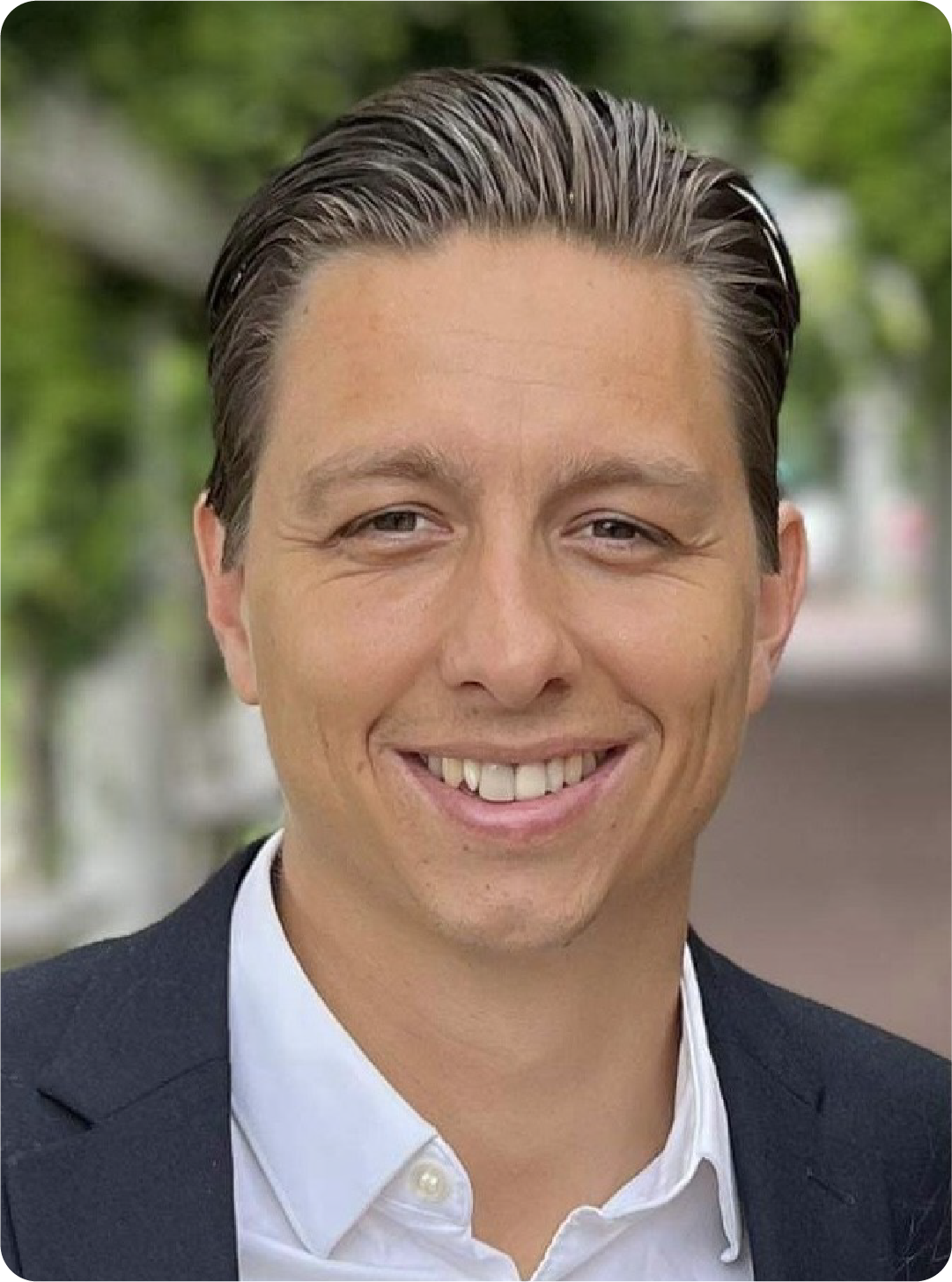
Speaker: Trond Andersen, Google
Abstract: Quantum simulation promises to enable the study of complex physical systems beyond the reach of classical computers, potentially opening new possibilities in materials and drug discovery. By directly emulating the continuous physical dynamics instead of applying discretized gates, analog quantum simulators offer a promising path, featuring faster growth of entanglement entropy and efficient preparation of relevant low-temperature states. However, they face two critical challenges: reduced programmability compared to universal digital circuits and typically higher control errors.
In this talk, I will show how we bridge this gap using a hybrid analog-digital quantum architecture with up to 97 superconducting qubits. Leveraging the combination of analog advantages with the versatility offered by digital gates, we simulate a quantum XY magnet and discover the breakdown of a widely used prediction known as the Kibble-Zurek mechanism. Moreover, by interleaving digital gates within the analog evolution, we perform a suite of linear and nonlinear spectroscopy measurements that emulate techniques used to characterize magnetic materials in solid-state labs. This allows us to probe the temperature-dependent dynamics of spin waves (magnons) in the magnet, directly resolving their interaction mechanisms.
The high accuracy of our simulations is enabled by sophisticated calibration protocols and characterization via a new Hamiltonian learning scheme. Benchmarking our results against state-of-the-art tensor network methods, we find that classical techniques fail to achieve the same level of accuracy as system size and effective temperature increase. This work establishes hybrid analog-digital quantum simulators as a powerful platform for the study of complex many-body dynamics.
Bio: Trond I. Andersen is a senior research scientist at Google Quantum AI, working on many-body quantum simulation experiments and beyond-classical applications on current superconducting qubit hardware. Trond received his B.S. in Physics at MIT, where he studied optoelectronic phenomena in graphene. He later earned his PhD in Mikhail Lukin's group at Harvard University, where he performed studies of excitons in twisted 2D semiconductors, and also used nanoscale defects in diamond to probe electron-phonon dynamics in graphene. In his current work at Google, Trond focuses particularly on hybrid analog-digital quantum simulation, aimed at gaining new insights about both non-equilibrium phenomena and ground state properties in quantum magnets.