

Date: August 27, 2026
Time: 11:45 a.m. - 12:45 p.m.
Location: G01 Gates Hall
Title: AI's Models of the World, and Ours
Speaker: Jon Kleinberg, Cornell University
Host: Immanuel Trummer
Abstract: Recent work on generative AI and large language models has addressed the simultaneous challenge of evaluating an AI system's explicit behavior at one level and its implicit representations of the world at another. These distinctions become crucial as people interact with powerful AI systems, where a mismatch between the system's model of the world and our human models of the world can lead to situations in which the system has inadvertently `set us up to fail' through our interaction with it. We explore these questions through the lens of generative AI, drawing on examples from game-playing, geographic navigation, and other complex tasks: When we train a model to win chess games, what happens when we pair it with a weaker partner who makes some of the moves? When we train a model to find shortest paths, what happens when it has to deal with unexpected detours? The picture we construct is further complicated by theoretical results indicating that successful generation can be achieved even by agents that are provably incapable of identifying the model they're generating from. The talk will include joint work with Ashton Anderson, Karim Hamade, Reid McIlroy-Young, Siddhartha Sen, Justin Chen, Sendhil Mullainathan, Ashesh Rambachan, Keyon Vafa, Chris Qiu, and Prabhakar Raghavan.
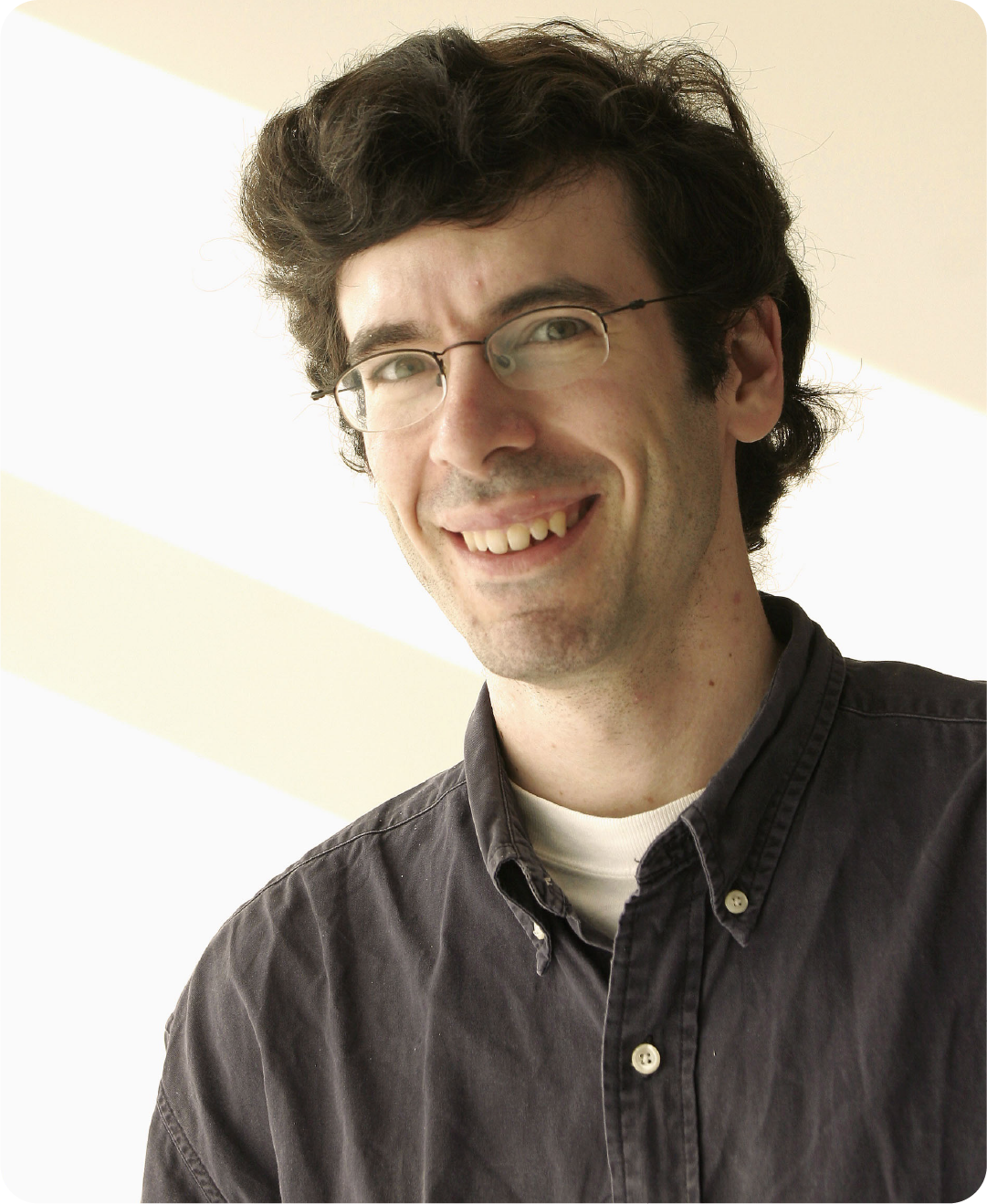
Bio: Jon Kleinberg is the Tisch University Professor in the Departments of Computer Science and Information Science at Cornell University. His research focuses on the interaction of algorithms and networks, the roles they play in large-scale social and information systems, and their broader societal implications. He is a member of the National Academy of Sciences, the National Academy of Engineering, the American Academy of Arts and Sciences, and the American Philosophical Society, and he has served on advisory groups including the National AI Advisory Committee (NAIAC) and the National Research Council's Computer Science and Telecommunications Board (CSTB). He has received MacArthur, Packard, Simons, Sloan, and Vannevar Bush research fellowships, as well as awards including the the Nevanlinna Prize, the World Laureates Association Prize, the ACM/AAAI Allen Newell Award, and the ACM Prize in Computing.