

Date: October 17, 2025
Speaker: Johannes Paetzold, Weill Cornell
Title: Structure, topology and geometry for robust vision models in medicine and beyond
Abstract: Geometric concepts and structure are intuitive to humans but remain underused in neural network training; for example, we naturally understand the shortest path between two locations on a map (a graph problem) or recognise the shape of an object regardless of its orientation (a symmetry problem). Because these concepts are so intuitive, I am convinced that geometry will continue to play a major role in computer vision . In particular, geometric understanding can help align models to human preferences which is especially relevant in this era of reasoning frontier models. In this talk, I will first present our research on leveraging concepts from algebraic topology to improve image segmentation. I will then show how we use graphs to inject domain knowledge into vision-language models, improving predictive performance on clinical tasks and yielding structured, human-interpretable explanations.
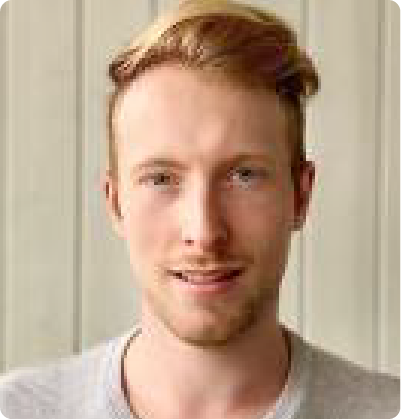
Bio: Johannes Paetzold is a computer scientist and Assistant Professor in the Department of Radiology at Weill Cornell Medicine and co-affiliation at Cornell Tech. His research focuses on computer vision and medical image analysis, with a particular emphasis on geometric and topological deep learning. He develops methods that integrate structural and topological priors into deep neural networks. Furthermore, he works on interpretable and data-efficient medical image analysis, leveraging graph neural networks, multimodal data integration, and generative models.
Before joining Cornell, Dr. Paetzold was a postdoctoral researcher in the Department of Computing at Imperial College London and served as the AI Team Leader at the Institute for Intelligent Biotechnologies (iBIO) at Helmholtz Zentrum Munich. He completed his Bachelor’s, Master’s, and Ph.D. degrees in Electrical Engineering and Computer Science at the Technical University of Munich. He is a recipient of the Kurt Fischer Dissertation Award and research donations from Apple Machine Learning Research.