

Date: September 4, 2026
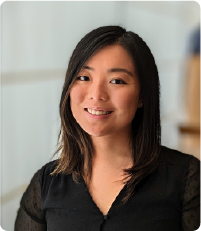
Speaker: Diana Cai, Assistant Professor, Department of Computer Science, Cornell Bowers
Title: From intuition to innovation: accelerating scientific discovery through black-box probabilistic inference
Abstract: Modern scientific discovery is often constrained by noisy and expensive data, and further challenges arise from the need to model complex latent processes. Scientists are increasingly turning to probabilistic models, which offer a principled framework for uncertainty quantification and a vehicle for encoding domain-based intuition. Yet computational challenges frequently stand between modeling and scientific innovation. In particular, posterior inference over latent variables remains a central bottleneck.
Variational inference (VI) methods recast posterior inference as an optimization problem. Enabled by advances in automatic differentiation, VI is now broadly accessible to scientists through “black-box” VI (BBVI) methods based on stochastic gradient descent. But BBVI often converges slowly due to noisy gradients and sensitivity to learning parameters, especially for more expressive variational families.
In this talk, I present Batch-and-Match (BaM), a new approach to BBVI based on matching the scores of the variational and target distributions on a batch of samples. BaM avoids stochastic gradient descent, admits closed-form updates for full-covariance Gaussians, and converges with significantly fewer gradient evaluations than standard BBVI. I then discuss extensions to high dimensions and richer variational families. Using materials design as a motivating application, I show how variational inference, combined with physics knowledge, accelerates the prediction of stable materials. I conclude by outlining a broader vision for probabilistic machine learning and its role in modern scientific discovery.
Bio: Diana Cai is an assistant professor of computer science at Cornell University. Her research spans the areas of machine learning and statistics, and focuses on developing probabilistic machine learning methods motivated by applications in the natural sciences. Previously, Cai was a research fellow in the Center for Computational Mathematics at the Flatiron Institute. She completed her M.A. and Ph.D. in computer science from Princeton University, and received an M.S. in statistics from the University of Chicago, and an A.B. in computer science and statistics from Harvard University.