

Date: April 24, 2026
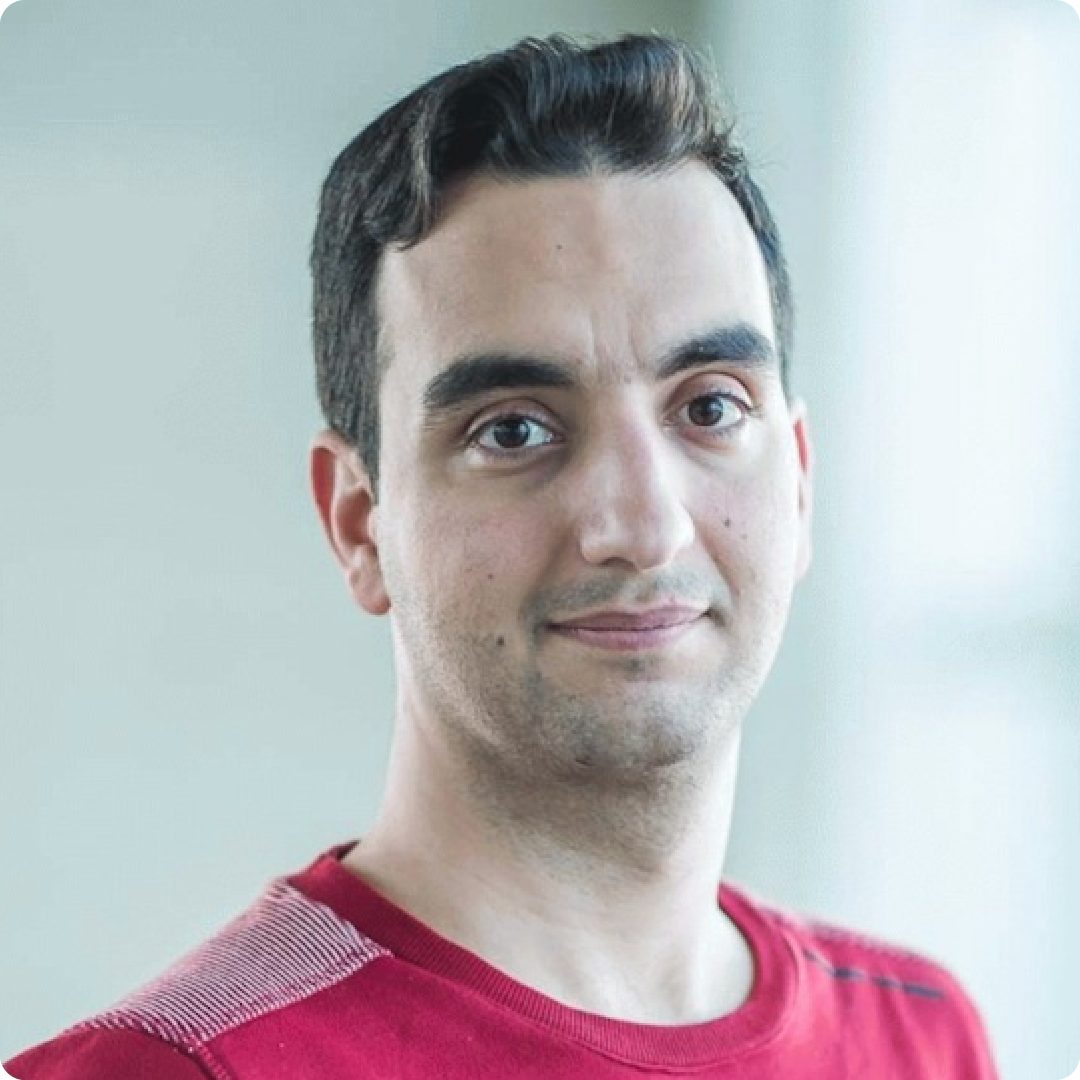
Speaker: Soroosh Shafiee, assistant professor, School of Operations Research and Information Engineering, Cornell University
Title: Harnessing the Power of GPUs for Mixed-Integer Programming
Abstract: The recent success of Artificial Intelligence is largely attributed to the rise of Deep Learning, a paradigm made possible by the massive parallel computing power of GPUs and the efficiency of first-order optimization. However, while Deep Learning excels at pattern recognition, many critical problems in operations research, healthcare, and finance require certifiably optimal solutions, which are traditionally modeled as Mixed-Integer Programming (MIP) problems. Despite their importance, traditional MIP solvers rely on CPU-based, second-order methods that scale poorly to modern high-dimensional datasets and cannot easily leverage GPU acceleration. In this talk, we take a significant first step toward bridging this hardware-software gap by solving a class of MIP problems, specifically sparse generalized linear models (GLMs), to global optimality using a GPU-friendly framework. We propose a unified proximal first-order framework that achieves provable linear convergence by exploiting novel geometric properties of the perspective relaxation. We demonstrate that our method leverages GPU acceleration to speed up dual bound computations by orders of magnitude, significantly enhancing the capability of Branch-and-Bound frameworks to certify optimality for large-scale problems. Our results show substantial speedups over state-of-the-art commercial solvers like Gurobi and MOSEK, suggesting a new path forward for high-performance optimization in the era of big data.
Bio: Soroosh Shafiee is an assistant professor in the School of Operations Research and Information Engineering at Cornell University. Before that, he held positions as a postdoctoral researcher at both the Tepper School of Business at Carnegie Mellon University and the Automatic Control Laboratory at ETH Zurich. He held a B.Sc. and M.Sc. degree in Electrical Engineering from the University of Tehran and a Ph.D. degree in Management of Technology from EPFL. His primary research interests revolve around low-complexity decision-making, optimization under uncertainty and optimal transport.