CS 4414/5416:
Systems Programming
Processes
2026-10-06
Warm Up
Which of these are elements of a page table entry structure that might be stored in a TLB?
- The virtual memory address
- The physical frame number
- Write and execute permission flags
- The accessed and dirty bits
- Device and block number in swap space
Logistics
Grading Update
- Prelim and other marked things are up
- P3 final represents only the autograded work
- Will have additional entries for rest
PollEv
- See: How to check in
- We now have a PollEv login from Canvas
- Freebies on PollEv days so far
- Will try to make it harder to skip registering!
Upcoming
- P3 (minishell) due Monday, 10/19
- Lab 7 is Friday: building pipelines
- NB: labs/projects are fair game for exams!
- No class 10/13 - Fall Break!
Minishell
- You are allowed to refactor
- Just maintain the tested interfaces
- Pipes from built-ins are not required
- But are interesting should you wish
- URL input should accommodate large files
- Don’t just assume it will fit in memory!
- Should still clean up after failed pipelines
Break Week
- No lecture 10/13 - enjoy fall break!
- I will be away for 10/15 lecture
- Prof Adrian Sampson will introduce TCP sockets
Recap
Where We Are
This module: Unix abstractions
- Basic abstractions (files, pipes, virtual memory)
- Processes and inter-process communication
- Introduction to TCP sockets
(Yes, some overlap with 3410/4410.)
This Week
- Today: processes and IPC
- Review of processes from 3410
- Managing children
- Scheduling
- Signal handling
- Inter-process comm mechanisms
- Thu: pipes, Unix sockets, and shared memory
- Fri: lab on Unix pipelines
Process Basics
What is a Process?
An instance of a program in execution
- Contains full execution state of a program
- CPU state, memory map, file descriptors, …
- Is the main unit of execution in multi-tasking
The Process Control Block
Kernel-maintained PCB data structure tracks
- Process ID
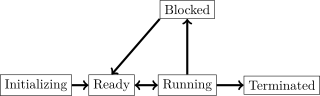
- Process status (running, sleeping, etc)
- Program counter and register state
- File descriptor table
- Page table
and more!
Processes and the Kernel
Processes run in user mode; kernel takes control when
- A hardware interrupt happens
- Basis for pre-emptive multitasking
- An instruction traps into kernel
- Could be a deliberate syscall
- Or via something like a TLB miss
Crossing kernel boundary is not free!
Life Cycle of a Process
Processes vs Threads
Thread \(<\) process!
- Per thread: stack, PC, CPU state
- Threads share: memory address, files, etc
- We’ll address threads later
- OS mostly deals with processes
Ask Me a Question!
Managing Children
Forking and Subprocesses
Two phases to launch a new program (C interface):
- Call
forkfor new process- In parent: returns with child PID
- In child: returns 0
- Child calls
execto start new program
Rust does a combination.
Subprocesses in Rust
std::process::Commandis a builder- Set things up via methods on
Command
- Set things up via methods on
- Lauch immediately with
spawn - Launch and wait with
outputorstatus
Arguments and Environment
- Command line arguments via
argorargs - Also pass information through environment variables
- These are just key/value string pairs
- Default is to inherit parent process env
- Edit with
env,envs,env_clear,env_remove
I/O Redirection
Commandmethods setstdin,stdout,stderr- Can take
Stdioobject built fromStdio::inherit()- inherit from parentStdio::piped()- set up a pipeStdio::from(file)- connect to a file
- A
Childhasstdin,stdout,stderrfields- Use
take()to connect to something else
- Use
Caveat Lector!
let mut child = Command::new("ls") // the program to run
    .arg("-la")                    // add one argument (or .args([...]))
    .stdout(Stdio::piped())        // Prep for standard output
    .spawn()?;                     // fork + exec, returns a Child handle

// --
// Try to set up another subprocess to read, and it fails to launch...
// --

let mut sink = std::io::sink();
let mut stdout = child.stdout.take();
std::io::copy(&mut stdout, &mut sink); // IMPORTANT!

let status = child.wait()?;        // block until it finishes
Why is that line important?
Wrappers and Permissions? (an aside)
- Linux also lets you change
- Process user/group/permissions
- Virtual FS root
- System-dependent! Not part of
std::process::Command - Use
std::os::unix::process::CommandExtmethods
Handling Return Values
- Child in terminated state just holds onto exit code
waiton child to complete and get code- Otherwise, “zombie” process continues on!
Reaping Zombies
What if parent exits without wait on children?
- Parent is responsible for cleaning up!
- Zombie children are adopted by init process
- Init process has a “reaper” to finish the zombies
- Connect to
SIGCHLDhandler
- Connect to
Poll Everywhere!
Why should crates like zerocopy disallow references in mapped data structures?
- References do not implement the Clone trait
- References will be invalid when moved to another process
- References will be invalid when moved even in the same process
Respond at: https://PollEv.com/davidbindel252 or send davidbindel252 to 22333
Signals
What’s a Signal?
A signal notifies the process of a system event
- Ex: Ctrl-C, terminal hangup, child stopped
- Frequently sent on system events
- Can send explicitly with
kill
Signal Handlers
- Each signal has a default handler
- Options: Core dump, terminate, ignore
- Can sometimes write your own – carefully!
- Communicate through volatile variables
- Very few functions are safe to call
- In Rust, use signal-hook crate
Scheduling
Scheduling Desiderata
- Everyone ready should get a fair share
- Important tasks should get more CPU time
- Best to re-schedule repeatedly to same core
Of course, this matters for benchmarking…
Nice
- “Niceness” is a property used by scheduler
- There’s an internal priority that overrides
- More nice means that it waits longer
- Can use negative niceness as superuser
reniceadjusts niceness of running process
Pinning
- Can also tell OS what core we prefer
- Helps with cache re-use!
- Think P2 timing…
- Relevant command is
taskset - Can even reserve CPUs at boot time!
Ask Me a Question!
Inter-Process Communication
Why Separate Processes?
- Composition and separate concerns
- Pipelines of “small sharp tools”
- Front-end / back-end
- Mixed-language programming
- Programming services
Low-Level Mechanisms for IPC
- Shellouts, wrappers, intermediate files
- Pipes and FIFOs
- Shared memory
- Unix domain sockets
- Network sockets
Abstractions for IPC
- Message queues
- Remote procedure calls
- Promises
Common Design Issues
- How do we maintain consistent distributed state?
- How do we track software version inconsistencies?
- How do we handle partial failure?
- How do we debug issues?
- What’s with all the buffers?
- Zero copy is a magical thing…
Error Handling
Need to handle many possible errors:
- Crash of child (or parent)
- Connection errors
- Weird I/O errors!
Broad problem: partial failure
Buffering
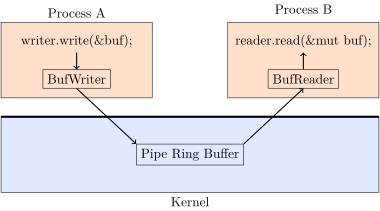
- Many buffers (at reader, writer, in kernel)
- But they aren’t infinite
- Don’t forget to flush!
Blocking I/O
Writers block when out of buffer
- Blocked writer won’t terminate!
- Easy way to get things to hang…
Poll Everywhere!
How do you feel about today’s lecture?
- Replicates 3410, skip or shorten in F27
- Mostly review, nice to have a reminder
- Lots was new to me, but I mostly followed
- This is way too fast, I was repeatedly lost
Respond at: https://PollEv.com/davidbindel252 or send davidbindel252 to 22333
Wrap-Up
Summary
- Process: an instance of a program in execution
- System code involves many processes
- Often parents launching children
- OS scheduling is process-by-process
- Outside files, processes are mostly isolated
- Can send in a little info via signals
- More general inter-process communication is key!
Up Next
- Thu lecture: pipes, sockets, shared memory IPC
- Lab 7 is Friday: building pipelines
- No class 10/13 - Fall Break!
- P3 (minishell) due Monday, 10/19
Outro
On Ed: If you are having trouble with PollEv after this lecture, please post on today’s Ed thread (and try to help us figure it out before Thu).